The No-Nonsense Guide to Fertilizing Your Houseplants
I killed my first really nice plant - a gorgeous calathea - not from neglect, but from too much love. Specifically, too much fertilizer. I dumped a full-strength dose of the fancy stuff into its pot every week for a month because I figured if a little food is good, more food must be better.
The leaves turned brown and crispy from the edges in. Classic fertilizer burn. I did not know that was a thing. Now I do, and now you do too, so we can skip that particular heartbreak together.
Fertilizing houseplants does not have to be complicated. But there are a few things worth understanding before you start pouring mystery liquid into your pots. Let us break it down.
Why Houseplants Need Fertilizer at All
Outdoor plants have a whole ecosystem working for them. Decomposing leaves, earthworms, rain washing minerals through the soil - nature handles the buffet. Your houseplants live in a pot with maybe a cup of soil, and every time you water, nutrients wash out the drainage hole.
Over time, even good potting mix gets depleted. Your plant is not dying, but it is not thriving either. Growth slows down, leaves get smaller, colors fade. Fertilizer replaces what the soil loses and gives your plant the building blocks it needs to actually grow.
Think of it like vitamins. You can survive without them, but you feel a lot better with them.
Understanding NPK (It Is Simpler Than It Sounds)
Every fertilizer has three numbers on the label, like 10-10-10 or 3-1-2. Those numbers represent the ratio of three nutrients:
Nitrogen (N) - This is the leaf guy. Nitrogen drives foliage growth, helps leaves stay green and lush, and fuels stem development. If your plant looks pale and leggy, it might need more nitrogen.
Phosphorus (P) - This is the root and flower guy. Phosphorus supports strong root systems and encourages blooming. If you grow flowering houseplants like African violets or orchids, phosphorus matters.
Potassium (K) - This is the overall health guy. Potassium helps with disease resistance, water regulation, and general cellular functions. Think of it as your plant’s immune system support.
For most foliage houseplants - your pothos, philodendrons, monsteras, snake plants - a balanced fertilizer (like 10-10-10 or 20-20-20) or something with a slightly higher nitrogen ratio (like 3-1-2) works great. You do not need to overthink this. A general-purpose houseplant fertilizer from any garden center will do the job.
Types of Fertilizer: Which One Should You Buy?
Walk into a garden center and you will see fifty options. Here is what actually matters.
Liquid Fertilizer (The Most Popular Choice)
Liquid fertilizer comes as a concentrate you mix with water. You dilute it and pour it right into the soil when you water. This is what most houseplant people use, and for good reason - it is easy to control the strength, works quickly, and distributes evenly through the soil.
The downside is you have to remember to do it regularly, usually every two to four weeks during the growing season.
Good for: Most houseplants, especially if you want control over dosing.
Slow-Release Granules or Pellets
These are little balls you sprinkle on top of or mix into the soil. They break down gradually over weeks or months, releasing a small amount of nutrients every time you water. Osmocote is probably the most well-known brand.
The upside is convenience - apply once and forget about it for three to six months. The downside is less control. If you over-apply, you cannot easily undo it.
Good for: People who forget to fertilize, outdoor containers, plants you do not fuss over much (like pothos or ZZ plants).
Fertilizer Spikes
These are compressed sticks you push into the soil. They dissolve slowly, similar to granules. They are fine, but nutrients tend to concentrate around where you stuck the spike rather than distributing evenly. For small pots, this can mean one side of the root ball gets fed while the other does not.
Good for: Honestly, I would skip these for most houseplants. Liquid or granules are better options.
When to Fertilize (Timing Is Everything)
Here is the single most important rule: only fertilize when your plant is actively growing.
For most houseplants in the northern hemisphere, that means roughly March through September. During spring and summer, your plants are putting out new leaves, growing roots, and using energy. That is when they need fuel.
In fall and winter, most houseplants slow way down or go semi-dormant. They are not growing much, so they are not using nutrients. Fertilizing during dormancy is like piling food on the plate of someone who is sleeping - it just sits there and causes problems. Unused fertilizer builds up as mineral salts in the soil, which can burn roots and damage your plant.
A Simple Schedule That Works
- March through August: Fertilize every two to four weeks with liquid fertilizer at half the recommended strength. Yes, half. The bottle always tells you to use more than you need.
- September: Cut back to once a month.
- October through February: Stop fertilizing entirely. Let your plants rest.
If you use slow-release granules, apply once in early spring and maybe once more in midsummer. That is it.
The Golden Rule: Less Is More
If I could tattoo one piece of plant advice on every new plant parent’s brain, it would be this: you can always add more fertilizer, but you cannot take it back.
Under-fertilizing is almost never a problem. Your plant might grow a little slower, but it will be fine. Over-fertilizing causes real damage - burned leaf tips, crispy edges, white crusty buildup on the soil surface, and in bad cases, root death.
Start with half the recommended dose. Seriously. If your plant responds well after a month or two, you can gradually increase. But most houseplants do perfectly well at half strength for their entire lives.
Signs You Are Over-Fertilizing
Watch for these red flags:
- Brown or burned leaf tips and edges (especially if you are watering correctly)
- White crust forming on the soil surface or pot rim
- Wilting despite moist soil
- Yellowing lower leaves that drop off
- Stunted or distorted new growth
If you see these signs, flush the soil by running water through the pot for several minutes to wash out excess salts. Then skip fertilizing for at least a month. In severe cases, repot with fresh soil.
Signs Your Plant Could Use a Feed
On the flip side, these hints suggest your plant is hungry:
- Slow or stalled growth during the growing season
- Pale or yellowing leaves (especially older ones)
- Leaves that are smaller than usual
- A general “blah” look despite proper light and water
These symptoms overlap with other problems (overwatering, poor light), so make sure those basics are covered first before reaching for the fertilizer.
Special Cases Worth Knowing
Newly Repotted Plants
Fresh potting soil usually has enough nutrients to last a month or two. Skip fertilizing for at least four to six weeks after repotting. Your plant is already stressed from the move - do not add a chemical meal on top of that.
Succulents and Cacti
These slow growers need very little fertilizer. Once a month during summer at quarter strength is plenty. Some people skip fertilizer for succulents entirely and they do fine.
Orchids
Orchids benefit from a “weakly, weekly” approach during their growing season - a very diluted orchid-specific fertilizer every week. They are growing in bark, not soil, so nutrients wash through quickly.
Herbs and Edibles
If you are growing kitchen herbs indoors (Thai basil, cilantro, green onions), go easy on fertilizer. You are eating these plants, and heavy fertilizing can actually make herbs taste less flavorful. A light feeding once a month is enough.
My Actual Routine (Keeping It Real)
Here is what I actually do, because I know fancy schedules sound great in theory and then life happens.
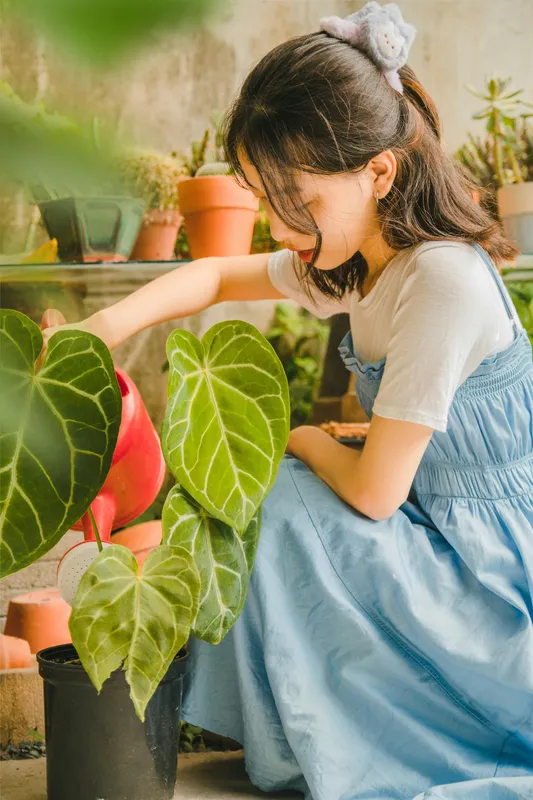
I keep a bottle of liquid fertilizer next to my watering can. During spring and summer, roughly every other watering, I add a half-strength dose to the water. That is it. No calendar reminders, no apps, no tracking spreadsheet. Every other watering, a little food in the water.
In October, I put the fertilizer bottle under the sink and forget about it until March. Done.
Is this perfectly optimized? No. Does it work for my 30-something houseplants? Absolutely. My plants grow well, look healthy, and I have not burned one since that calathea incident years ago.
The Bottom Line
Fertilizing does not need to be stressful or complicated. Get a basic liquid houseplant fertilizer, use it at half strength during the growing season, stop in winter, and do not overdo it. Your plants will thank you with bigger leaves, stronger growth, and that lush look that makes your living room feel like a greenhouse.
And if you forget to fertilize for a month or two? Your plants will be fine. They survived millions of years without us measuring out 10-10-10. A little benign neglect never hurt a pothos.