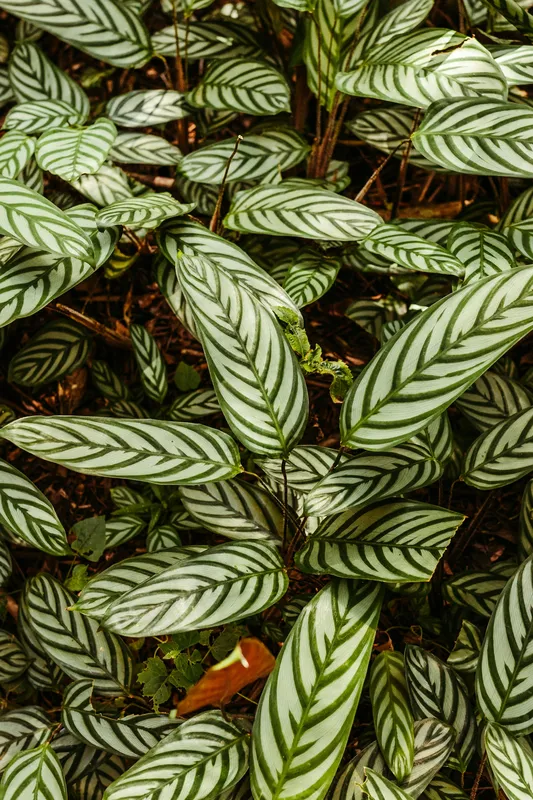
Ctenanthe Care: The Never Never Plant That Never Lets You Down
If you have spent any time in the prayer plant world - calatheas, marantas, stromanthes - you know the deal. They are gorgeous. They are dramatic. They will absolutely punish you for looking at them wrong.
Enter the Ctenanthe (pronounced “teh-NAN-thee”), also called the never never plant. It has all the stunning foliage of its prayer plant cousins but with a slightly more forgiving personality. Think of it as the calathea that actually wants you to succeed.
I picked up my first Ctenanthe burle-marxii at a plant swap a couple years ago. Someone was practically giving divisions away because the thing grows so fast. Two years later, that little division is now a bushy showpiece sitting on top of my son’s bookshelf, and I have given away three divisions myself. The circle of plant life continues.
What Makes Ctenanthe Special
Ctenanthes belong to the Marantaceae family, which makes them true prayer plants. Like their calathea and maranta relatives, they fold their leaves upward at night and open them back up during the day. If you have never watched a prayer plant do its evening routine, it is genuinely mesmerizing. My kids call it “the plant going to sleep.”
There are several popular species you will find:
Ctenanthe burle-marxii (Fishbone Prayer Plant) - The most common one. It has pale green leaves with dark green fishbone-patterned stripes and deep purple undersides. Compact grower, usually stays under 18 inches.
Ctenanthe oppenheimiana (Never Never Plant) - Taller and more dramatic, with cream, green, and silver variegation. Can reach 3-4 feet indoors given enough time.
Ctenanthe lubbersiana (Bamburanta) - Splashy yellow and green variegation that looks almost painted on. A real conversation starter.
Ctenanthe setosa (Grey Star) - Silver-green leaves with darker green edges. Probably the most forgiving of the bunch.
No matter which species you pick, the care is pretty similar across the board.
Light Requirements
Ctenanthes are understory plants from the tropical rainforests of Brazil. In the wild, they grow under the canopy of taller trees, catching dappled, filtered light. That tells you everything you need to know about what they want indoors.
The sweet spot is bright, indirect light. A north-facing window works well, or a spot a few feet back from an east-facing window. They can handle medium light too, though growth will slow down.
What you want to avoid is direct sunlight. Those beautiful patterned leaves will fade, bleach, or scorch if they get hit with direct afternoon sun. I learned this the hard way when I moved mine to a south-facing windowsill for a week during a gray stretch of winter. The leaves got crispy edges within days.
On the flip side, too little light means leggy, stretched-out growth and faded leaf patterns. If your Ctenanthe is reaching toward the window like it is trying to escape, it needs more light.
A quick rule of thumb: if you can comfortably read a book in the spot without straining, your Ctenanthe will probably be happy there too.
Watering - The Most Important Part
Here is where most people go wrong with prayer plants, so pay attention.
Ctenanthes want their soil consistently moist but never soggy. Think of a wrung-out sponge - damp to the touch, but no water dripping out. This is different from most houseplants where you let the soil dry out between waterings.
How I water mine:
I check the soil every 3-4 days by sticking my finger about an inch deep. If the top inch feels dry, I water. If it still feels slightly damp, I wait another day or two. In summer, that usually means watering twice a week. In winter, once a week or less.
The water quality matters. This is not optional fussiness - Ctenanthes are genuinely sensitive to the chlorine, fluoride, and mineral salts in most tap water. You will see brown leaf tips and edges if you use straight tap water.
Your options:
- Filtered water is the easiest solution if you already have a Brita or similar
- Rainwater is the gold standard if you can collect it
- Tap water left out overnight lets chlorine evaporate, though it does not help with fluoride
- Distilled water works but gets expensive if you have a lot of plants
I keep a gallon jug of filtered water at room temperature next to my plant shelf. Room temperature is important too - cold water shocks the roots and can cause leaf curling.
Humidity - Yes, They Need It
If I could only give you one piece of advice about Ctenanthes, it would be this: get a humidifier.
These plants come from tropical rainforests where humidity is 60-80%. Your average home, especially in winter with the heat running, sits around 30-40%. That is a big gap, and it shows up as brown, crispy leaf edges.
What actually works for humidity:
- A small humidifier nearby - This is the real answer. A $30 cool mist humidifier near your plant shelf solves the problem completely
- Grouping plants together - Plants release moisture through their leaves, so clustering them creates a microclimate. This helps but usually is not enough on its own
- Pebble trays - Fill a tray with pebbles and water, set the pot on top. The evaporating water adds some humidity around the plant
What does not work:
- Misting - I know everyone recommends this. It raises humidity for about 15 minutes, then you are back to square one. Plus wet leaves can invite fungal problems. Save yourself the trouble.
Our apartment in Queens had terrible dry air in winter. Once I set up a humidifier in the corner of the living room, my Ctenanthe (and all the calatheas next to it) went from sad and crispy to lush and gorgeous within a few weeks.
Soil and Potting
Ctenanthes need soil that holds moisture but still drains well. That sounds contradictory, but it is not - you want the soil to stay evenly damp without becoming waterlogged.
My go-to mix:
- 2 parts regular potting soil
- 1 part perlite (for drainage)
- 1 part peat moss or coco coir (for moisture retention)
If you want to keep it simple, a standard peat-based potting mix with an extra handful of perlite mixed in works fine.
Pot choice matters too. Use a pot with drainage holes - no exceptions. I like plastic or glazed ceramic for Ctenanthes because unglazed terracotta wicks moisture away from the soil too fast for these moisture-loving plants.
Repot every 1-2 years or when you see roots circling the bottom of the pot. Spring is the best time. Go up only one pot size - these plants do not like swimming in too much soil.
Temperature
Room temperature is perfect for Ctenanthes. They are happy in the 65-80 degrees Fahrenheit range, which is basically whatever temperature you keep your home.
The main thing to watch out for is cold drafts and sudden temperature swings. Keep them away from:
- Drafty windows in winter
- Air conditioning vents
- Exterior doors that open frequently
- Heating vents that blow hot, dry air
I lost a few leaves on mine one winter because it was sitting near a window that I kept cracking open at night. Once I moved it to the bookshelf across the room, no more problems.
Feeding
Ctenanthes are not heavy feeders. During the growing season (spring through early fall), fertilize once a month with a balanced liquid fertilizer diluted to half strength.
Stop fertilizing in winter when growth slows down. Excess fertilizer salts build up in the soil and can burn the roots and leaf edges - the same brown tips you see from bad water quality.
If you notice salt buildup (white crusty deposits on the soil surface), flush the soil by running water through it for a minute or two. This washes out the accumulated salts.
Common Problems and Fixes
Brown, crispy leaf tips and edges This is almost always a humidity or water quality issue. Increase humidity and switch to filtered or distilled water. The brown tips will not go back to green, but new growth should come in healthy.
Curling or rolling leaves Your plant is thirsty, cold, or both. Check the soil moisture and move it away from any cold drafts. Leaves should unfurl within a day of getting what they need.
Yellow leaves Usually overwatering. Check if the soil is staying soggy for too long. Make sure the pot has drainage and the soil mix is not too dense.
Faded or washed-out leaf patterns Too much light. Move the plant further from the window or add a sheer curtain to filter the light.
Leggy, stretched growth Not enough light. Move closer to a bright window, but remember - indirect only.
Leaves not closing at night This can happen when the plant is stressed from too much light, inconsistent watering, or temperature fluctuations. Get the basics dialed in and the prayer movements should return.
Pests to Watch For
Ctenanthes can attract the usual indoor plant pests:
Spider mites are the most common enemy. They love dry conditions, so keeping humidity up is your first line of defense. Check the undersides of leaves for tiny webbing. If you find them, wash the plant in the shower and treat with neem oil.
Mealybugs show up as little white cottony clusters in leaf joints and under leaves. Remove them with a cotton swab dipped in rubbing alcohol, then follow up with neem oil.
Fungus gnats are annoying but mostly harmless. They come from overwatering. Let the top of the soil dry out slightly between waterings and they will move on.
A good habit is giving your plant a quick inspection whenever you water. Catching pests early makes them way easier to deal with.
Propagation - Free Plants for Everyone
One of the best things about Ctenanthes is how easy they are to propagate by division. When your plant gets big enough, you will see distinct clumps that can be separated.
How to divide:
- Water the plant a day before dividing so the roots are hydrated
- Gently remove the whole plant from its pot
- Tease apart the root ball, separating clumps that have their own stems and root systems
- Plant each division in its own pot with fresh soil mix
- Water thoroughly and keep humidity high for the first few weeks
Spring is the best time for division, when the plant is gearing up for active growth. Each division should have at least 3-4 stems for the best chance of success.
I divide mine every couple of years and either pot up the divisions as gifts or bring them to local plant swaps. Ctenanthes are the perfect pass-along plant.
Why I Think Every Plant Parent Should Try One
If you have been scared off by calatheas (no shame - we have all been there), a Ctenanthe is your second chance at prayer plant happiness. They have all the visual drama - the patterns, the colors, the nightly leaf movements - with a bit more resilience.
They are not indestructible. You still need to pay attention to humidity and water quality. But they bounce back faster from mistakes and generally tolerate imperfect conditions better than their pickier cousins.
Start with a Ctenanthe setosa or burle-marxii if you want the most beginner-friendly options. Once you get the hang of it, work your way up to the more variegated varieties.
And if you end up with a plant that grows faster than you expected and starts taking over your shelf space? Divide it and share the love. That is what plant community is all about.