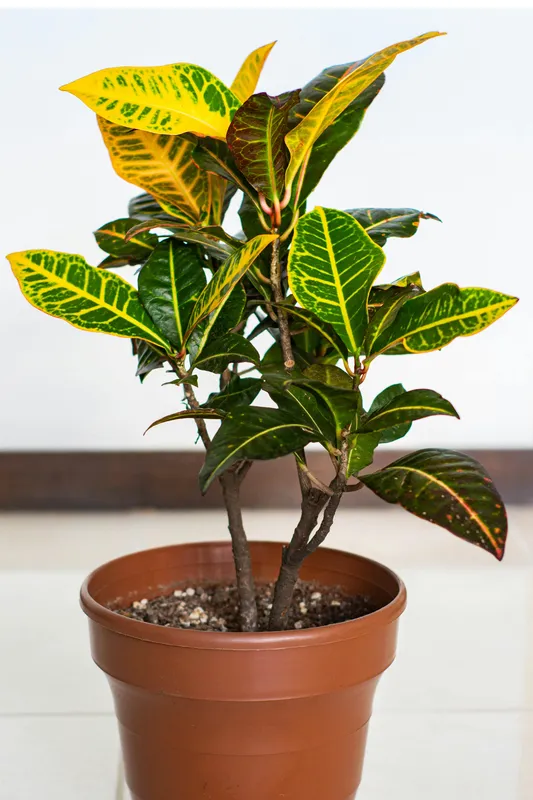
Croton Care: The Most Dramatic Plant You Will Ever Love
Let me tell you about the time I brought home a gorgeous croton from the garden center. It had leaves like a sunset - reds, oranges, yellows, and deep greens all swirled together on a single plant. I set it on our dining room table, called my wife over to admire it, and felt pretty proud of myself.
Three days later, half the leaves were on the floor.
If you have ever owned a croton (Codiaeum variegatum), you know exactly what I am talking about. These plants are the drama queens of the houseplant world. Move them to a new spot? Leaf drop. Change your watering schedule? Leaf drop. Look at them wrong on a Tuesday? Believe it or not, leaf drop.
But here is the thing - once a croton settles into its spot and you figure out what it wants, it becomes one of the most rewarding houseplants you can own. No other common houseplant gives you this range of color. We are talking deep burgundy, electric yellow, hot pink, and every shade of orange and green in between. All on the same plant.
What Makes Crotons Special
Crotons are tropical evergreen shrubs native to Southeast Asia, Indonesia, and the Pacific Islands. In their natural habitat, they grow as outdoor shrubs and small trees, often reaching 6 to 10 feet tall. As houseplants, most stay between 2 and 4 feet.
The real draw is the foliage. There are hundreds of croton cultivars, and the leaf shapes and colors vary wildly. Some popular varieties include Petra (the classic one with bold red, orange, and yellow veining), Gold Dust (dark green leaves speckled with bright yellow dots), Mammy (twisted, curling leaves in deep reds and purples), and Zanzibar (narrow, grass-like leaves with splashes of color).
What I find fascinating is that no two leaves look exactly the same. Even on a single plant, older leaves will have different color patterns than newer ones. The colors deepen and change as the leaves mature, so your plant is always putting on a slightly different show.
Light: The Number One Priority
If there is one thing you take away from this post, let it be this: crotons need bright light. A lot of it.
In their native tropical habitat, crotons grow in bright, dappled sunlight. As houseplants, they want the brightest spot you can give them. A south-facing or west-facing window is ideal. East-facing works too, especially if the window is unobstructed.
Here is what happens with different light levels:
Bright direct or bright indirect light - This is the sweet spot. Your croton will maintain its vivid colors, produce new growth regularly, and stay compact and bushy. A few hours of direct morning sun is actually great for them.
Medium light - The plant will survive, but new leaves will come in mostly green. Over time, the existing colorful leaves may fade. The plant might get leggy as it stretches toward whatever light it can find.
Low light - Just don’t. A croton in low light is a sad croton. It will drop leaves, lose all its color, and slowly decline. If you want a low-light plant, get a pothos or a ZZ plant instead.
One thing I learned the hard way: if you are moving a croton from a lower light spot to a brighter one, do it gradually over a week or two. Otherwise the sudden change in light can cause - you guessed it - leaf drop.
Watering: Consistent But Not Soggy
Crotons like their soil consistently moist but never waterlogged. Think of it like a wrung-out sponge - damp, but not dripping.
My routine is to water when the top inch of soil feels dry. I stick my finger in the pot (the sophisticated method), and if it feels dry past my first knuckle, it is time to water. In summer, this ends up being roughly once a week. In winter, more like every 10 to 14 days.
A few watering tips that have saved me a lot of grief:
Water thoroughly. When you water, really soak the soil until water runs out the drainage holes. Then let it drain completely. No sitting in a saucer of water.
Use room temperature water. Crotons are tropical plants and they do not appreciate cold shocks to their root system. I fill my watering can the night before and let it sit overnight.
Watch for drooping. If your croton’s leaves start to droop and look limp, it is thirsty. Water it and it should perk back up within a day. But do not wait for drooping to become your regular signal - by that point, you are stressing the plant.
Do not overwater. Overwatering leads to root rot, which is much harder to fix than underwatering. If the leaves are turning yellow from the bottom up, you might be giving it too much water. Check the soil moisture before watering every single time.
Humidity: Higher Is Better
This is where a lot of people struggle with crotons, especially in apartments with forced air heating (hi, every apartment in New York City during winter).
Crotons naturally grow in humidity levels of 40 to 80 percent. Most homes sit around 30 to 40 percent, and in winter with the heat running, it can drop to 20 percent or lower. That is desert-level dry for a tropical plant.
Signs your croton needs more humidity include brown, crispy leaf edges and tips, leaves curling inward, and overall dull-looking foliage.
Here is what actually works for boosting humidity:
Humidifier. This is the most effective option, full stop. I run a small humidifier near my tropical plants from October through March. It made a bigger difference than anything else I tried.
Pebble tray. Fill a shallow tray with pebbles and water, then set the pot on top. As the water evaporates, it creates a little humid microclimate around the plant. It is not as effective as a humidifier, but it helps.
Group your plants. Plants naturally release moisture through transpiration. Grouping several tropical plants together creates a more humid zone. My croton lives next to a calathea and a fern, and they all benefit from each other.
Misting is overrated. I know everyone says to mist your plants. The truth is that misting raises humidity for about five minutes before the water evaporates. It is not doing much. But if it makes you feel like a good plant parent, go for it. No judgment.
Temperature: Keep It Warm and Steady
Crotons prefer temperatures between 60 and 85 degrees Fahrenheit. They can handle brief dips lower than that, but sustained temperatures below 50 degrees will cause serious damage.
More importantly, crotons hate temperature fluctuations. Keep them away from cold drafts near windows and doors in winter, air conditioning vents in summer, and radiators or heating vents (the hot dry air is a double problem).
If you bring your croton outside for the summer (which they love, by the way), make sure to bring it back inside well before nighttime temperatures drop below 55 degrees. And be prepared for some adjustment leaf drop when you bring it back in. It is just what crotons do.
Soil and Potting
Crotons do best in a well-draining potting mix that retains some moisture without getting soggy. I use a basic recipe of about 60 percent regular potting soil, 20 percent perlite for drainage, and 20 percent peat moss or coco coir for moisture retention. A slightly acidic pH between 5.5 and 6.5 is ideal.
Make sure your pot has drainage holes. I cannot emphasize this enough. A croton in a pot without drainage is a croton on borrowed time.
Repot every 1 to 2 years in spring, going up one pot size. Crotons do not mind being slightly rootbound, so there is no rush. You will know it is time when roots start circling the bottom of the pot or poking out the drainage holes.
And yes - repotting may cause some leaf drop. Are you sensing a pattern here?
Feeding
During the growing season (spring through early fall), feed your croton every 2 to 4 weeks with a balanced liquid fertilizer diluted to half strength. I use a standard 10-10-10 or 20-20-20 formula.
In winter, stop fertilizing completely. The plant is not actively growing, and unused fertilizer salts can build up in the soil and burn the roots.
One tip: if your croton’s colors seem washed out even though it is getting plenty of light, try a fertilizer with a slightly higher potassium content. Potassium supports vibrant foliage color in many plants.
Common Problems and How to Fix Them
Leaf drop after moving. This is normal and not a sign of failure. The plant is adjusting. Keep care consistent, resist the urge to move it again, and new leaves will grow back in a few weeks.
Losing color. Almost always a light issue. Move the plant to a brighter spot (gradually). If light is already good, check your fertilizer.
Brown crispy edges. Low humidity. See the humidity section above. A humidifier is your best friend.
Yellow leaves dropping from the bottom. Overwatering or natural aging. Check your soil moisture before watering. If the lowest leaves are the only ones yellowing, it might just be the plant shedding old growth - that is normal.
Tiny webs on leaves. Spider mites love crotons, especially in dry conditions. Wipe the leaves with a damp cloth regularly, boost humidity, and treat with neem oil or insecticidal soap if you see an infestation.
Mealybugs in leaf joints. Those cottony white blobs at the base of leaves are mealybugs. Dab them with a cotton swab dipped in rubbing alcohol, or treat with neem oil.
A Note About Toxicity
This is important, especially for us parents with curious toddlers and pets. Crotons are toxic if ingested. The sap can also cause skin irritation in some people.
Keep your croton out of reach of small children and pets. I keep mine on a high shelf that my 4-year-old cannot reach. If anyone does get sap on their skin, wash with soap and water. If a child or pet eats any part of the plant, call poison control or your vet immediately.
Why I Keep Coming Back to Crotons
Despite the drama - the leaf drop, the light demands, the humidity tantrums - I keep buying crotons. I currently have three, and I am eyeing a Mammy at the nursery down the street.
There is something about a plant that looks like it was hand-painted by an artist that keeps me coming back. My kids love pointing out new colors as the leaves change. My Petra sits in our living room window and catches the afternoon light in a way that makes the whole room glow.
Yes, they are fussy about change. But once you figure them out, crotons reward you with some of the most spectacular foliage in the houseplant world. Find them a bright spot, water consistently, give them some humidity, and then leave them alone. That last part is the hardest for most of us plant parents. But with crotons, benign neglect (in the right conditions) is the ultimate care strategy.
Quick Care Summary
- Light: Bright indirect to bright direct. South or west window is ideal.
- Water: When the top inch of soil is dry. Thorough watering, good drainage.
- Humidity: 40 to 80 percent. Use a humidifier in winter.
- Temperature: 60 to 85 degrees Fahrenheit. Avoid drafts and sudden changes.
- Soil: Well-draining, slightly acidic (pH 5.5 to 6.5).
- Fertilizer: Balanced liquid fertilizer every 2 to 4 weeks in the growing season.
- Toxicity: Toxic to pets and children. Handle sap with care.
- Drama level: High. But worth it.