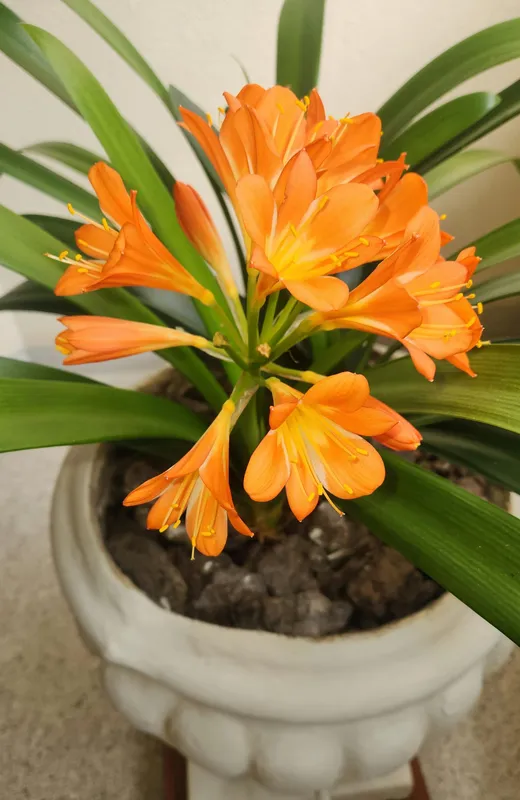
Clivia Care Guide: The Gentleman’s Orchid That Blooms in the Shade
There is a plant sitting on my parents’ living room shelf that has been alive longer than me. It is a clivia, and my mom waters it maybe once every two weeks, never repots it, and occasionally forgets it exists for a month. Every spring, it blooms. Every single spring, without fail, it pushes up a thick stalk and opens into a cluster of orange flowers that look like tiny trumpets.
When I asked her what her secret was, she shrugged and said, “I just leave it alone.”
That, in a nutshell, is the clivia experience. Clivia miniata is one of the most forgiving houseplants you will ever meet, and it rewards your neglect with one of the most spectacular indoor flower shows around. If you have a shady corner and a little patience, this plant might become your favorite.
What Is a Clivia?
Clivia miniata - sometimes called bush lily, fire lily, or Natal lily - is a flowering plant native to the shaded forests of South Africa. It grows from thick, fleshy roots (not bulbs, despite what some people think) and produces arching, strap-shaped dark green leaves that look good even when it is not in bloom.
But the real show happens in late winter or early spring, when a thick flower stalk emerges from the center of the leaf cluster and opens into a cluster of 12 to 20 trumpet-shaped flowers. The most common color is a bright, warm orange with a yellow center, though you can find varieties in yellow, cream, and even deep red.
In Chinese culture, clivia is known as junzi lan, which translates to something like “gentleman’s orchid” or “virtuous orchid.” It is not actually an orchid at all - it belongs to the Amaryllis family - but the name reflects the high regard Chinese plant enthusiasts have for it. My grandmother kept one on her windowsill in Guangzhou, and my mom brought the tradition to our house in Queens. The plant represents integrity, dignity, and quiet strength. Which is a lot of pressure for something sitting in a plastic pot on a shelf, but clivia handles it well.
Light Requirements
Here is the best thing about clivia: it actually prefers shade. In its native habitat, it grows on the forest floor under a canopy of trees, so it has evolved to thrive in the kind of low light that kills most flowering houseplants.
Bright, indirect light is ideal. An east-facing window works great. A north-facing window is fine too. The one spot you want to avoid is direct afternoon sun, which can scorch the leaves and cause them to turn yellow or develop brown patches.
If you have a room that you consider “too dark for plants,” try a clivia there before you give up. It will not bloom as heavily in very low light, but it will survive and look green and healthy. And honestly, a clivia that never blooms is still a handsome plant.
One thing I have learned the hard way: clivias that get good light in winter tend to bloom better in spring. If you can, give yours a spot near a window during the colder months. It does not need to be bright - just consistent.
Watering
Clivia is the plant for people who forget to water. Its thick, fleshy roots store moisture, so it can go longer between waterings than most houseplants.
During the growing season (spring and summer), water thoroughly when the top inch or two of soil feels dry. Let the water drain through the pot completely, dump out any excess from the saucer, and then leave it alone until the soil dries out again. In practice, this usually means watering about once a week in summer, maybe every ten days in spring and fall.
Here is the important part: in winter, cut way back on watering. Clivia needs a dry rest period to trigger blooming. From roughly November through January, water just enough to keep the leaves from wilting - maybe once every two to three weeks. The soil should be on the dry side. I know it feels wrong to neglect a plant on purpose, but this is the one case where doing less truly is doing more.
Overwatering is the number one killer of clivias. If the roots sit in soggy soil, they will rot, and a clivia with root rot is very hard to save. When in doubt, wait another day or two before watering.
Soil
In the wild, clivia does not grow in soil at all. It grows in decomposing leaf litter on the forest floor, so it likes a growing medium that is rich in organic matter but drains fast.
A good clivia mix looks something like this:
- Two parts high-quality potting mix
- One part orchid bark or coconut coir
- One part perlite
You want something that holds some moisture but never gets waterlogged. If you stick your finger in the soil after watering and it feels like a wrung-out sponge, you are in the right zone. If it feels like mud, add more bark or perlite.
I have also seen people grow clivia in straight orchid bark with good results. The key is drainage. These roots hate sitting in water.
Temperature and Humidity
Clivia is comfortable in normal household temperatures - 60 to 75 degrees Fahrenheit during the growing season is perfect. It is not fussy about humidity either. Average indoor humidity is fine.
The one non-negotiable is the cold rest period. For your clivia to bloom reliably, it needs six to eight weeks of cooler temperatures in winter - ideally around 50 to 55 degrees Fahrenheit. This is the signal that tells the plant to start developing flower buds.
If you have an unheated room, a cool basement with a window, or even a spot near a drafty window, that can work. I keep mine on the enclosed porch from late November through early January, where it stays cool but does not freeze. When I bring it back inside to a warmer room and start watering normally again, the flower stalk usually appears within six to eight weeks.
No cold period usually means no flowers. The plant will be perfectly healthy otherwise - it just will not bloom. If you live in a warm climate and cannot provide that winter chill, clivia still makes a great foliage plant. Those glossy dark green leaves look good year-round.
Feeding
Clivia is not a heavy feeder, but it appreciates regular fertilizing during the growing season.
Use a balanced liquid fertilizer (something like 10-10-10 or 20-20-20) diluted to half strength, and apply it every two to four weeks from spring through early fall. Stop fertilizing completely in winter during the rest period.
Some growers switch to a high-phosphorus fertilizer (like 10-30-20) in late winter when the plant comes out of dormancy, to encourage blooming. I have tried this and honestly cannot tell if it makes a difference, but it does not hurt.
Do not overfeed. Too much fertilizer can burn the leaf tips and actually inhibit blooming. If you see brown tips on the leaves and you know you are not overwatering, ease up on the fertilizer.
Repotting (or Not Repotting)
Here is my favorite clivia fact: they bloom best when they are rootbound. Seriously. A clivia crammed into a pot that looks way too small will often flower more reliably than one in a spacious container.
My mom’s clivia has been in the same pot for at least five years, and it blooms every year. I asked her when she last repotted it and she looked at me like I had asked her to explain quantum physics.
Only repot when the roots are literally pushing the plant out of its container or when the soil has broken down so much that water runs straight through. When you do repot, go up only one pot size. And do it right after blooming in late spring - never during the rest period.
Use a pot with drainage holes. This is non-negotiable. Clivia roots will rot in a pot without drainage faster than you can say “I should have listened to that blog post.”
Common Problems
Yellow lower leaves: If the oldest leaves at the base are turning yellow, that is usually normal aging. Just trim them off. If newer leaves are yellowing, check your watering - overwatering is the most likely culprit.
No flowers: Almost always a rest period issue. The plant needs those six to eight weeks of cool temperatures and reduced watering in winter. Without it, no blooms. Also make sure it is getting enough light, especially in the months leading up to bloom time.
Leaf scorch (brown or pale patches): Too much direct sun. Move it to a shadier spot.
Mushy base or foul smell: Root rot from overwatering. Unpot the plant, trim any rotten roots (they will be brown and mushy instead of white and firm), let the roots dry out for a day, and repot in fresh, well-draining soil. Water sparingly until you see new growth.
Mealybugs: These cotton-like white pests love clivias, especially in the crevices where leaves meet the stem. Wipe them off with a cotton swab dipped in rubbing alcohol, and treat with neem oil or insecticidal soap if the infestation is bad.
Flower stalk stuck between leaves: Sometimes the flower stalk cannot push past tightly packed leaves. This usually happens when the transition from cold to warm was too abrupt. Next year, try warming the plant up more gradually.
Propagation
Clivia produces offsets - baby plants that grow from the base of the mother plant. These are the easiest way to propagate.
Wait until the offsets have at least three or four leaves and some roots of their own. Then, when you repot, gently separate them from the mother plant with a clean knife. Pot each offset in its own small container with well-draining soil. Keep them in bright, indirect light and water sparingly until they are established.
Fair warning: clivia is slow. A newly separated offset can take two to four years before it blooms for the first time. This is a plant that teaches patience, which is maybe why my mom and I both like it so much.
You can also grow clivia from seed, but that takes even longer - sometimes five years to first bloom. Unless you really enjoy the process (no judgment, some people find it meditative), stick with offsets.
Why I Think Every Home Should Have One
There are plenty of beautiful houseplants out there, but clivia has something most of them do not: it gets better with age. A mature clivia that has been in the same pot for years, with a dense fan of glossy leaves and multiple flower stalks, is genuinely stunning. And unlike a lot of flowering houseplants, it does not need constant fussing to look its best.
It is also one of those plants that connects you to something bigger. When I look at my clivia, I think about my mom’s plant, and her mom’s plant before that. Three generations of Chinese American families keeping the same kind of plant on the same kind of shelf. There is something comforting about that.
If you are looking for a low-light, low-maintenance houseplant that will reward your patience with flowers, start here. Get a clivia, put it in a shady corner, mostly leave it alone, and see what happens. I think you will be pleasantly surprised.
Quick Care Reference
- Light: Bright indirect to low light. No direct afternoon sun.
- Water: Moderate in spring/summer, very sparingly in winter.
- Soil: Rich, well-draining. Orchid bark and perlite mixed with potting soil.
- Temperature: 60-75F growing season. 50-55F for winter rest.
- Humidity: Average indoor humidity is fine.
- Fertilizer: Half-strength balanced fertilizer every 2-4 weeks, spring through early fall.
- Repotting: Rarely. Blooms better when rootbound.
- Toxicity: Mildly toxic to pets and children if ingested. Keep out of reach.