How to Clean Your Houseplant Leaves (And Why It Actually Matters)
I am going to be honest with you. For the first two years of being a plant dad, I never once cleaned a leaf. Not one. I watered my plants. I fussed over their light. I even talked to them (mostly complaining about my commute, but still). The idea that I should also be wiping down their leaves never crossed my mind.
Then one day my mom visited and immediately started wiping my fiddle leaf fig’s leaves with a damp paper towel. “So dusty,” she said, shaking her head with that particular brand of Chinese mom disappointment that hits different. She was right. Those leaves were coated in a fine gray film that I had somehow never noticed.
Turns out, cleaning your plant leaves is not just about aesthetics. It is one of the simplest things you can do to keep your plants healthy, and almost nobody talks about it. So let us fix that.
Why Dusty Leaves Are a Problem
Plants breathe through tiny pores on their leaves called stomata. They take in carbon dioxide and release oxygen through these openings - it is how photosynthesis works. When dust, grime, or mineral deposits build up on leaf surfaces, those pores get partially blocked.
The result? Your plant cannot photosynthesize as efficiently. Some research suggests that a heavy dust layer can reduce light absorption by up to 30 percent on broadleaf plants. That is like putting sunglasses on your monstera and wondering why it is not pushing out new leaves.
Dust also creates a cozy environment for pests. Spider mites in particular love dusty, neglected leaves. If you have ever dealt with a spider mite infestation, you know it is the kind of experience that makes you question all your life choices. Regular cleaning disrupts their plans considerably.
And if you have allergies (like I do), dusty plants are not doing your sinuses any favors either. Those leaves are collecting the same dust that would otherwise settle on your furniture, which sounds helpful until you realize it just sits there circulating back into your air every time a breeze hits.
How Often Should You Clean Plant Leaves?
Here is the good news: you do not need to do this every day. For most houseplants, a good wipe-down once a month is plenty. If you live in a particularly dusty environment - near a construction site, in a dry climate, or if you have kids who generate dust through some mysterious process I have yet to understand - you might want to bump that up to every two weeks.
A quick test: run your finger across a leaf. If you can see a line where your finger was, it is time to clean.
I like to tie leaf cleaning to another routine so I actually remember to do it. First Saturday of the month is watering-and-wiping day in our house. My daughter helps with the big monstera leaves, which she calls “giving the plants a bath.” Whatever works.
The Best Methods for Different Plant Types
Not all leaves are created equal, and the cleaning method that works great for a rubber plant could damage an African violet. Here is what to use for each type.
Large, Smooth Leaves (Monstera, Fiddle Leaf Fig, Rubber Plant, Bird of Paradise)
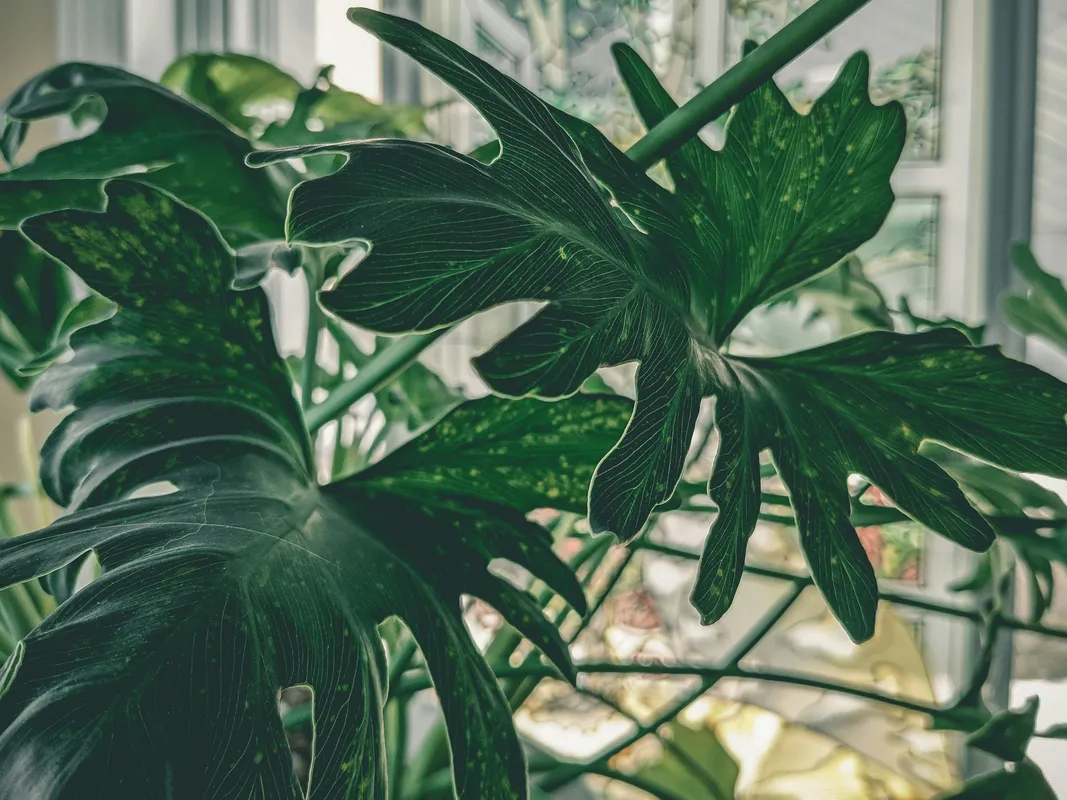
These are the easiest to clean and also the most satisfying. There is something deeply pleasant about wiping a dusty monstera leaf and watching it go from matte gray-green to glossy and vibrant.
What to do: Dampen a soft microfiber cloth with room-temperature water. Support the leaf underneath with one hand while you gently wipe the top surface with the other. Flip the cloth and wipe the underside too - that is where pests like to hang out.
Pro tip: Always wipe from the base of the leaf toward the tip, following the natural direction. This avoids accidentally tearing the leaf or snapping it off the stem. I learned this the hard way with a beautiful philodendron gloriosum leaf that I will never get back.
Fuzzy or Textured Leaves (African Violet, Calathea, Rex Begonia)
Water and fuzzy leaves do not mix well. Droplets can leave spots, promote fungal growth, or damage the delicate hairs that give these plants their texture.
What to do: Use a soft, dry brush instead. A clean makeup brush or a soft-bristled paintbrush works perfectly. Gently sweep the dust off each leaf. My wife donated a blush brush to the cause after I explained why I was using her good one. She was less upset about the brush than about the fact that I had been using it for weeks without asking.
Small-Leafed Plants (Ferns, String of Pearls, Pothos with Lots of Vines)
Wiping every individual leaf on a Boston fern would take approximately the rest of your natural life. Do not do this.
What to do: Take the whole plant to the sink or shower and give it a gentle rinse with lukewarm water. Let the water run over all the foliage for a minute or two. The key word here is lukewarm - cold water can shock tropical plants, and hot water can damage leaf tissue. Think comfortable bath temperature.
Let the plant drain completely before putting it back in its spot. Nobody wants a puddle on the shelf.
Cacti and Succulents
These guys collect dust too, but their waxy coating and sometimes spiny surface make them a little trickier to clean.
What to do: Use a soft brush or even a can of compressed air (the kind you use for keyboards) held about six inches away. For smooth succulents like echeveria, you can use a barely damp cloth, but avoid getting water in the rosette center where it can cause rot.
What NOT to Use on Your Plant Leaves
This part is important because there is a lot of questionable advice floating around the internet and even at some garden centers.
Skip the Leaf Shine Products
Those spray bottles that promise to make your leaves look like they belong in a magazine? Hard pass. Most commercial leaf shine products coat the leaves with oils or waxes that clog the stomata. Your plant might look Instagram-ready for a few days, but underneath that shine, it is slowly suffocating.
If you want naturally shiny leaves, clean them with plain water. That is it. A healthy, clean leaf has its own beautiful sheen.
Be Careful with Household Cleaners
I have seen people recommend wiping leaves with milk, mayo, banana peels, coconut oil, and olive oil. Please do not put condiments on your plants. Most of these leave a residue that attracts more dust and can clog pores. Milk especially can go rancid and start smelling terrible, which I unfortunately know from experience.
Plain water is your best bet. If you are dealing with particularly stubborn grime - like hard water spots or sticky residue from pest treatments - you can add a tiny drop of mild castile soap to your water. We are talking one or two drops per quart. Rinse the leaves afterward with clean water.
Avoid Rubbing Too Hard
Plant leaves are tougher than they look, but they are not indestructible. Scrubbing aggressively can damage the leaf surface, remove the protective waxy coating, or cause micro-tears that invite disease. Gentle pressure is all you need. If something does not come off with gentle wiping, try letting a damp cloth sit on the spot for a minute to loosen it up.
Cleaning as Pest Prevention
One of the most underrated benefits of regular leaf cleaning is that it doubles as a pest inspection. When you are up close and personal with every leaf, you notice things - tiny webs, sticky residue, little dots that were not there last week.
I have caught spider mite infestations early at least three times just because I was cleaning leaves and noticed something off. Early detection is everything with plant pests. By the time you can see obvious damage, the problem is usually well established.
While you are cleaning, check the undersides of leaves especially. That is prime real estate for spider mites, mealybugs, and scale insects. If you spot anything suspicious, isolate the plant immediately and treat it before the problem spreads to the rest of your collection.
A Quick Cleaning Routine That Actually Sticks
Here is the routine I have settled on after years of trial and error. It takes about 15 minutes for my entire collection of around 30 plants.
Weekly (takes 2 minutes): Quick visual scan while watering. Brush off any obviously dusty leaves with my hand. Check for pests.
Monthly (takes 15 minutes): Full wipe-down day. Large-leafed plants get the microfiber cloth treatment. Fuzzy plants get brushed. Small-leafed plants get a group shower session. I check the undersides of leaves for pests and wipe down the pots and saucers while I am at it.
Seasonally: Deep clean. This is when I also trim dead leaves, check for root-bound plants, and clean the shelves and window areas where my plants live. Think of it as spring cleaning for your plant family.
The trick to making this stick is keeping your supplies accessible. I keep a microfiber cloth and a small spray bottle of water right next to my watering can. If I have to go hunting for supplies every time, it is never going to happen.
Common Mistakes to Avoid
Cleaning in direct sunlight. Wet leaves plus direct sun can cause leaf burn - the water droplets act like tiny magnifying glasses. Clean your plants in the morning or move them out of direct light first.
Using cold water. Tropical houseplants do not appreciate cold showers any more than you do. Always use room temperature or lukewarm water.
Forgetting the undersides. The top of the leaf gets dusty, sure, but the underside is where stomata are concentrated and where pests hide. Do not skip it.
Cleaning new leaves too soon. Fresh, unfurling leaves are delicate. Wait until they have fully hardened off before cleaning them. On most plants, this means waiting until the leaf has fully unfurled and feels firm to the touch.
Never cleaning your tools. A dirty cloth just moves grime around and can spread disease from plant to plant. Use a fresh cloth or rinse it between plants.
The Payoff
After I started cleaning my plant leaves regularly, the difference was hard to ignore. My fiddle leaf fig pushed out three new leaves in a month - something it had never done before. The calatheas looked more vibrant. And I caught a mealybug problem on my hoya before it got out of control, which probably saved me from losing the plant entirely.
It is one of those low-effort, high-reward habits that makes you wonder why you did not start sooner. Kind of like flossing, but for plants. And unlike flossing, you can make your kids help.
So go ahead and run your finger across your nearest plant leaf. If it comes back dusty, you know what to do. Your plants have been waiting.