How to Choose the Right Pot for Your Houseplant
I want to tell you about the time I repotted a beautiful calathea into a massive glazed ceramic pot because it looked amazing on my shelf. The pot was gorgeous. Dark blue, no drainage hole, about three sizes too big. Within a month, the roots were sitting in swampy soil and the whole plant smelled like a forgotten gym bag. Classic root rot. I had to toss the soil and spend weeks nursing that plant back to health.
The lesson cost me one near-dead calathea and a lot of unnecessary stress. The pot you choose is not just a decorative decision - it directly affects how your plant drinks, breathes, and grows. Let me save you the trial and error.
The Only Rule That Actually Matters: Drainage
Before we talk about materials, sizes, or aesthetics, let us get the most important thing out of the way. Your pot needs a drainage hole. Period.
I know, I know. That beautiful planter you found at the home goods store does not have one. It is tempting to just add some gravel to the bottom and call it drainage. But gravel at the bottom of a pot does not create drainage - it creates a perched water table that keeps roots wetter for longer. This is one of the most persistent myths in houseplant care.
Water needs somewhere to go. If it cannot leave the pot, it sits around the roots, the soil stays soggy, and rot sets in. A drainage hole solves this completely. If you really love a decorative pot without drainage, use it as a cachepot - keep your plant in a plain nursery pot with holes and just slip it inside the pretty outer pot. Pull the inner pot out to water, let it drain, then pop it back in. Best of both worlds.
Terra Cotta: The Overwatering Safety Net
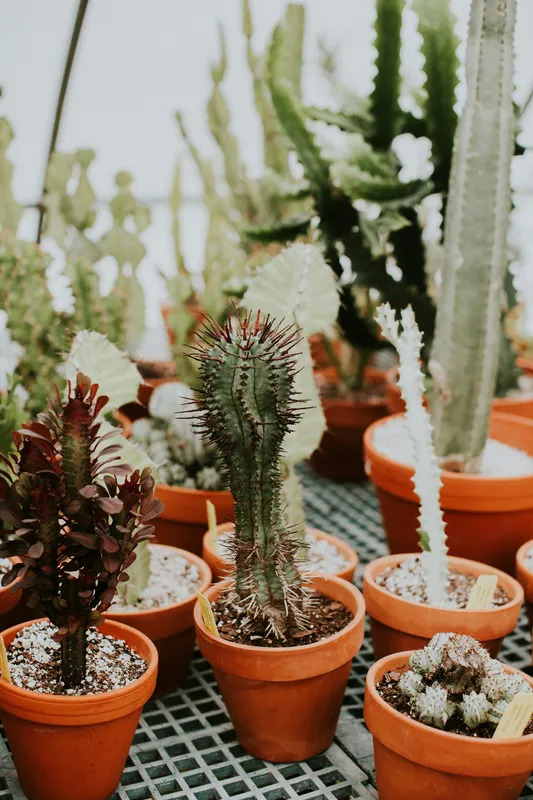
Terra cotta pots are the unglazed, orange-brown clay pots you see everywhere. They have been around for thousands of years for a reason - they work.
The magic of terra cotta is that it is porous. The clay has tiny air pockets that let moisture and air pass through the walls of the pot. This means soil dries out faster and roots get more oxygen. For anyone who tends to overwater (and honestly, that is most of us when we are starting out), terra cotta is incredibly forgiving.
Best for: Succulents, cacti, snake plants, ZZ plants, pothos, and anything that prefers drying out between waterings. If the plant comes from an arid environment, terra cotta is almost always a safe choice.
Watch out for: Plants that love consistent moisture - like calatheas, ferns, and many alocasias - might struggle in terra cotta because the soil dries too quickly. You will find yourself watering every other day in summer, which gets old fast.
The dad hack: Terra cotta pots develop a white mineral crust over time from mineral deposits in your water. Some people hate the look, but I think it gives them character. My dad had terra cotta pots on the porch covered in white streaks that he had used for fifteen years. They looked like they had stories to tell.
Cost: Very affordable. You can get a standard 6-inch terra cotta pot for a few dollars at any garden center.
Plastic: Lightweight and Underrated
Plastic pots get a bad reputation because they are not pretty. But functionally, they are excellent, and I would argue most serious plant people use way more plastic pots than they would admit to on social media.
Plastic is non-porous, so it retains moisture much longer than terra cotta. This is great for moisture-loving plants and for people who forget to water (no judgment - life with kids is chaotic). The soil stays evenly moist for days rather than drying out quickly.
Best for: Calatheas, ferns, alocasias, peace lilies, and any plant that likes consistent moisture. Also perfect for nursery-to-cachepot setups since you can hide the plastic pot inside a decorative one.
Watch out for: If you are a heavy waterer, plastic pots can keep things too wet. Combined with poor-draining soil, plastic pots increase root rot risk for plants that need drying time between waterings.
Practical bonus: Plastic pots are light, cheap, nearly indestructible, and perfect if you have kids or cats who knock things off shelves. Ask me how I know.
Glazed Ceramic: The Middle Ground
Glazed ceramic pots are clay pots with a coat of lacquer or glaze on the outside. The glaze seals the clay, making it non-porous like plastic but heavier and sturdier. They come in every color and style imaginable.
In terms of moisture retention, glazed ceramic sits between terra cotta and plastic. The glaze prevents moisture from escaping through the walls, but the weight and thickness of the clay does moderate soil temperature somewhat.
Best for: Pretty much any plant, as long as the pot has drainage. Glazed ceramic works well for medium-moisture plants like philodendrons, monsteras, and hoyas.
Watch out for: Cost. Nice glazed ceramic pots can get pricey, especially in larger sizes. They are also heavy and breakable - not ideal if you need to move your plants around frequently.
Pro tip: Check that the drainage hole is properly sized. Some glazed ceramic pots have drainage holes so tiny they might as well not exist. If the hole is smaller than a pencil eraser, consider drilling it wider or choosing a different pot.
Concrete and Stone: Heavy Hitters
Concrete and natural stone pots look stunning but come with tradeoffs. Concrete is slightly porous (similar to terra cotta but less so), while polished stone is generally non-porous.
The biggest consideration is weight. A large concrete planter full of wet soil is borderline immovable. If you are putting a big plant in a corner where it will stay forever, that is fine. If you like to rotate your plants for even light or rearrange your space, think twice.
Concrete can also leach lime into the soil over time, which raises the pH slightly. For most houseplants this is not a problem, but acid-loving plants might not appreciate it.
Best for: Statement plants in permanent locations. Fiddle leaf figs, large snake plants, or floor-sized monsteras that you want to anchor in a specific spot.
Self-Watering Pots: A Honest Take
Self-watering pots have a reservoir at the bottom that wicks moisture up to the roots through capillary action. They are marketed as the solution for forgetful waterers.
Here is my honest take: they work well for some plants and are a disaster for others. Plants that like consistent moisture - like peace lilies, ferns, and African violets - do genuinely well in self-watering pots. But plants that need to dry out between waterings - succulents, snake plants, ZZ plants - will rot.
The other issue is that the reservoirs can become breeding grounds for fungus gnats if you are not careful. Keep the reservoir clean and do not let water sit stagnant for weeks.
Best for: Office plants, travel situations, or specific moisture-loving plants. Not a universal solution.
Getting the Size Right
This is where people make mistakes almost as often as they do with drainage. The temptation is to go big - give the plant room to grow, right? But oversizing a pot is one of the fastest ways to kill a houseplant.
When you put a small plant in a big pot, there is a ton of soil that the roots have not reached yet. That soil holds moisture with no roots to absorb it, staying wet for way too long. The result is root rot, fungus, and an unhappy plant.
The general rule: Go up one size. If your plant is in a 4-inch pot, move it to a 6-inch. If it is in a 6-inch, go to an 8-inch. For pots 10 inches and larger, you can jump by 2-4 inches. That is it. One size up.
Signs your plant actually needs a bigger pot:
- Roots growing out of the drainage hole
- Water running straight through without being absorbed
- The plant is top-heavy and tipping over
- Growth has stalled even though light and care are good
- You can see more roots than soil when you pop it out
Signs your pot is too big:
- Soil stays wet for more than a week after watering
- You notice a musty or sour smell
- Fungus gnats suddenly appear in large numbers
- The plant looks “lost” in its container (this is a vibe thing, but trust me, you will know)
Matching Plants to Pots: A Quick Cheat Sheet
Here is a simple framework. Match the pot material to how the plant likes to drink:
Likes to dry out between waterings (terra cotta is your friend): Succulents, cacti, snake plants, ZZ plants, pothos, hoyas, and most philodendrons.
Likes consistent moisture (plastic or glazed ceramic): Calatheas, ferns, alocasias, peace lilies, nerve plants, and most begonias.
Tolerant of almost anything (use whatever you like): Monsteras, spider plants, Chinese evergreens, and dracaenas. These are adaptable enough to thrive in any material as long as there is drainage.
The Budget Strategy
If you are just starting out, here is what I would do. Buy a bunch of cheap nursery pots in a few sizes - they cost almost nothing and have great drainage. Put your plants in those. Then buy decorative cachepots (the ones without drainage holes) that match your style and just slip the nursery pots inside.
This setup gives you perfect drainage and airflow around the roots, plus the aesthetic you want for your space. When you need to water, pull the inner pot out, water it over the sink, let it drain for a few minutes, and put it back. It takes thirty extra seconds and saves you from a lot of problems.
My wife picked out some beautiful woven baskets and ceramic cachepots. The plants live in boring plastic nursery pots inside them. Nobody knows the difference, and nobody is getting root rot.
The Drainage Hole Hack for Decorative Pots
If you absolutely must use a pot without drainage, there are a few ways to make it work - though I still recommend the cachepot method above.
You can drill a hole in ceramic or concrete pots using a masonry drill bit. Go slow, keep the drill bit wet, and use light pressure. It is not hard, but it does require a drill and some patience. Terra cotta is easy to drill through. Glazed ceramic is harder but doable. Glass and metal are not worth the trouble.
If drilling is not an option, you can line the bottom with a layer of activated charcoal (about half an inch) to help absorb excess moisture and reduce odor. This is not a substitute for real drainage, but it buys you a little margin for error. Water very carefully and sparingly.
Common Mistakes
Putting gravel in the bottom for “drainage.” This does not improve drainage. It just raises the water table inside the pot. Skip it.
Choosing pots based purely on looks. That gorgeous pot means nothing if your plant is drowning in it. Function first, then find something pretty that also works.
Reusing old soil in a new pot. When you repot, use fresh potting mix. Old soil may harbor pests, fungi, or salt buildup from previous fertilizing.
Forgetting about the saucer. If your pot has a drainage hole (which it should), put a saucer underneath to catch runoff. But empty the saucer after watering - do not let your plant sit in a pool of water. That defeats the purpose of having drainage.
What I Actually Use at Home
I will be real with you. About 80% of my plants are in standard plastic nursery pots tucked inside cachepots. The other 20% - mostly my succulents on the kitchen windowsill and a few statement plants - are in terra cotta. I own exactly two nice glazed ceramic pots, and they hold my monstera and a fiddle leaf fig that are too big to use the cachepot trick.
It is not glamorous, but everything is alive and thriving. And at the end of the day, that is the whole point.
Your plant does not care if its pot cost five dollars or fifty. It cares about drainage, the right amount of soil moisture, and room to grow. Get those three things right, and the pot material is just fine-tuning.
Now go check if that decorative pot has a drainage hole. You know the one I am talking about.