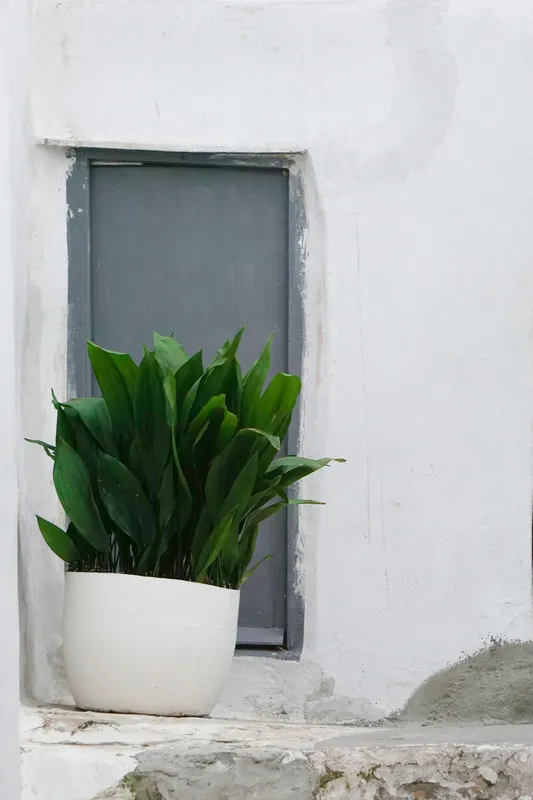
Cast Iron Plant Care: The Houseplant That Refuses to Die
There is a plant that survived Victorian parlors with coal-heated air, no ventilation, and gas lamp lighting. A plant that thrived in the dark corners of Chinese restaurants and Japanese entryways for generations. A plant that has earned its common name by being genuinely, stubbornly impossible to kill.
Meet the cast iron plant (Aspidistra elatior), and yes, it really is as tough as the name suggests.
My wife’s grandmother had one in her apartment in Flushing for what seemed like forever. It sat in a dark hallway, got watered whenever someone remembered, and still looked perfectly fine every time we visited. When she passed, the plant came home with us. That was six years ago, and it is still going strong in our living room corner where basically no other plant would survive.
If you want a houseplant that will not punish you for being busy, forgetful, or stuck with a dark apartment - this is the one.
Why the Cast Iron Plant Deserves More Hype
In a world obsessed with flashy monsteras and finicky fiddle leaf figs, the cast iron plant gets overlooked. That is a shame, because it is genuinely one of the best houseplants for real life - especially if you have kids, pets, a hectic schedule, or any combination of the above.
What makes it special:
- True low-light champion: Not “tolerates low light” but actually thrives in it. North-facing windows, dark hallways, interior rooms with no direct sunlight - all fine.
- Drought tolerant: Forgets to water for two weeks? Three weeks? It does not care. Seriously.
- Humidity independent: Unlike calatheas that throw a tantrum if humidity drops below 60 percent, cast iron plants are perfectly happy in dry apartment air.
- Slow and steady grower: Produces maybe 2 to 5 new leaves per year. It will not outgrow its pot or take over your shelf.
- Nearly pest-free: Spider mites and mealybugs rarely bother it. The thick, waxy leaves are not appealing to most common houseplant pests.
- Long-lived: With basic care, a cast iron plant can live for decades. This is a plant you can pass down to your kids.
Light Requirements
Here is the deal with cast iron plant and light: it genuinely does not need much.
Ideal light: Bright to moderate indirect light. Near a north-facing window or several feet back from an east-facing window is perfect. The plant will grow faster (relatively speaking - it is still slow) and produce slightly larger leaves in moderate indirect light.
Low light: Totally fine. This is where the cast iron plant really shines - or rather, where it does not need to shine at all. Interior rooms, hallways, offices with only fluorescent lighting, bathrooms with a small window. It handles all of these.
Direct sunlight: Avoid this. Direct sun will actually scorch the leaves, causing brown or bleached patches. If you have a south or west-facing window, keep the plant several feet away or use a sheer curtain.
I keep ours about eight feet from an east-facing window in the living room. It gets almost no direct light, just ambient brightness during the day. Perfectly happy.
Watering
Overwatering is the number one way people kill cast iron plants. Let me repeat that, because it is important: the most common mistake is watering too much, not too little.
How to water:
- Let the soil dry out completely between waterings. Stick your finger in the soil - if it feels dry 2 to 3 inches down, it is time to water.
- Water thoroughly until it drains from the bottom, then let it drain completely. Never let the pot sit in standing water.
- In summer, this usually means watering every 10 to 14 days. In winter, every 2 to 3 weeks or even longer.
Signs of overwatering: Yellowing leaves (especially lower leaves), mushy stems at the base, soil that stays wet for weeks. If you see these, cut back on watering immediately and check the roots for rot.
Signs of underwatering: Leaf tips turning brown and crispy, leaves curling slightly inward. This is much easier to fix - just give it a good drink and it will bounce back.
When in doubt, wait another few days before watering. The cast iron plant would rather be too dry than too wet.
Soil and Potting
Cast iron plants are not picky about soil, but they absolutely need good drainage.
Recommended soil mix:
- Two parts standard indoor potting mix
- One part perlite
- One part coarse orchid bark or pumice
This gives you a well-draining mix that does not hold too much moisture. If you are using a pre-mixed potting soil, just add a generous handful of perlite to improve drainage.
Pot requirements:
- Always use a pot with drainage holes. Non-negotiable for this plant.
- Terra cotta pots work great because they wick away excess moisture.
- Cast iron plants like to be slightly root-bound, so do not rush to repot. Every 3 to 5 years is usually sufficient.
- When you do repot, go up only one pot size (about 1 to 2 inches larger in diameter).
The best time to repot is spring, when the plant is entering its growing season. But honestly, if you forget and do it in summer, it will be fine. Cast iron plant, remember?
Temperature and Humidity
Temperature: 50 to 85 degrees Fahrenheit (10 to 29 Celsius). Normal room temperature is perfect. The cast iron plant tolerates a wider temperature range than most tropical houseplants and can even handle brief dips to 45 degrees Fahrenheit. Keep it away from heating vents and cold drafts from windows, but it is way less sensitive than most houseplants.
Humidity: Normal household humidity (30 to 50 percent) is completely fine. No humidifier needed. No pebble trays. No misting. If you have been battling humidity issues with calatheas or ferns, the cast iron plant will feel like a vacation.
This is one of the reasons I recommend it for New York City apartments. Our building heat in winter turns the air bone-dry, and the cast iron plant does not care at all.
Fertilizing
Cast iron plants are light feeders. Overfertilizing can actually damage them more than not fertilizing at all.
Feeding schedule:
- Use a balanced liquid houseplant fertilizer (like 10-10-10 or 20-20-20) diluted to half strength.
- Feed once in spring and once in mid-summer. That is it. Two times per year.
- Do not fertilize in fall or winter when the plant is barely growing.
If you forget to fertilize entirely for a year, your cast iron plant will not even notice. I have definitely gone a full year without feeding ours and it kept producing new leaves on schedule.
Propagation
Cast iron plants are propagated by division, and it is about as straightforward as plant propagation gets.
How to divide:
- Wait until spring. Remove the plant from its pot.
- You will see thick rhizomes (underground stems) connecting clusters of leaves. Each cluster typically has 3 to 5 leaves.
- Use a clean, sharp knife to cut between clusters, making sure each division has at least 3 leaves and a healthy section of rhizome with roots attached.
- Plant each division in its own pot with well-draining soil.
- Water lightly and place in a spot with indirect light.
- Be patient. New growth will be slow for the first few months as the plant establishes its roots.
A word of warning: because cast iron plants grow so slowly, it takes a while for divided plants to fill out. Plan on a year or two before they look full and established. This is a long game, not an instant gratification project.
Common Problems and Solutions
Brown leaf tips: Usually underwatering or very low humidity. Try watering a bit more frequently. If the tips are only slightly brown, it is mostly cosmetic and nothing to worry about.
Yellow leaves: Almost always overwatering. Let the soil dry out completely before watering again. Remove any yellow leaves - they will not recover.
Brown or bleached patches on leaves: Too much direct sunlight. Move the plant further from the window or add a sheer curtain.
No new growth: Probably normal. Cast iron plants are extremely slow growers, especially in low light. If it has been more than a year with zero new leaves, try giving it slightly more light or a dose of fertilizer in spring.
Leaf spots (brown or black): Could be a fungal issue from overwatering or water sitting on the leaves. Improve air circulation, water at the soil level instead of over the leaves, and let the soil dry between waterings.
Scale insects: The one pest that occasionally targets cast iron plants. Look for small brown bumps on the undersides of leaves. Wipe them off with rubbing alcohol on a cotton swab, then treat with neem oil.
Varieties Worth Knowing
The standard green cast iron plant is the most common, but there are some beautiful cultivars if you can find them:
- Aspidistra elatior ‘Milky Way’: Dark green leaves with tiny white or cream speckles, like stars. Gorgeous and still very tough. Slightly harder to find but worth the hunt.
- Aspidistra elatior ‘Variegata’: Green leaves with cream or white vertical stripes. Needs slightly more light than the all-green variety to maintain its variegation.
- Aspidistra elatior ‘Okame’: White-striped leaves. A classic in Japanese gardens and homes.
- Aspidistra elatior ‘Asahi’: Leaves develop white tips as they mature, creating a frosted appearance. Uncommon but stunning.
The variegated types are a bit less bulletproof than the standard green, but they are still far tougher than most houseplants.
Cultural Connections
In Chinese culture, aspidistra has long been associated with perseverance and resilience - qualities that resonate deeply in Chinese families. My wife’s grandmother called it a “patient plant” (she used a Cantonese term I can only approximate). The idea was that good things take time, and the plant that grows slowly but never gives up is the one worth keeping.
In Japan, aspidistra leaves are traditionally used as dividers between dishes in bento boxes and sushi presentations. The leaves are naturally antibacterial, which makes them functional as well as decorative. If you have ever eaten at a traditional sushi restaurant, you may have seen large, dark green leaves separating items - those are often aspidistra.
George Orwell even wrote a novel called “Keep the Aspidistra Flying” in 1936, using the plant as a symbol of middle-class domestic respectability in England. The cast iron plant has been a fixture in homes across cultures for well over a century.
Who Should Get a Cast Iron Plant
Perfect for you if:
- You are a complete beginner who has killed every plant you have ever owned
- Your apartment gets minimal natural light
- You travel frequently or have a chaotic schedule
- You want a houseplant that does not need a humidifier
- You have kids or pets who might bump or jostle plants (cast iron plant is also non-toxic to cats and dogs)
- You want a plant that will literally last for decades
Maybe not for you if:
- You want fast, dramatic growth (this plant grows at the speed of patience)
- You enjoy the ritual of frequent plant care and fussing
- You want a plant that flowers regularly (cast iron plants can flower, but the flowers are small, bloom at soil level, and are rare indoors)
Final Thoughts
The cast iron plant is not going to be your most Instagram-worthy houseplant. It does not have fenestrated leaves or pink variegation or trailing vines. What it has is staying power. It will be there, quietly green and healthy, year after year, while flashier plants come and go.
Sometimes the best plant is the one that just keeps going, no matter what life throws at it. Kind of like being a parent, honestly.
If you are looking for your first houseplant, or your fiftieth, give the cast iron plant a shot. You will not regret it - mostly because it is nearly impossible to mess up.