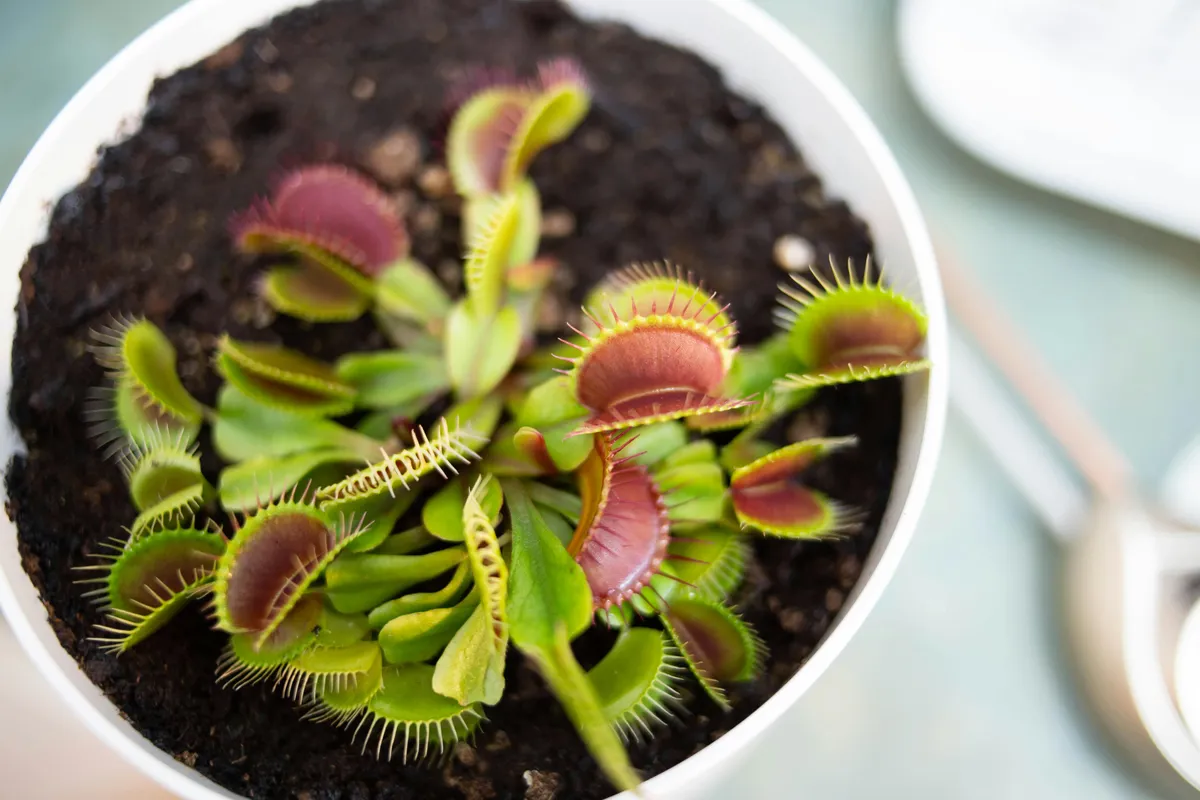
My Kids Begged for a Venus Flytrap: What I Learned the Hard Way
It started, as many parenting adventures do, at a nature museum gift shop.
My daughter spotted the Venus flytrap display near the register - those little plastic cups with a plant that looked like it had teeth - and immediately locked eyes with me. You know the look. The one that says: “I have already decided this is happening. You are just here to carry the bag.”
I bought two. One for her, one for my son, because sibling equity is a hill I will die on.
That was fourteen months ago. Here is what survived: one plant, one child’s interest in botany, and my newfound respect for the phrase “distilled water only.”
Why Carnivorous Plants Are Actually Great for Kids
Let me be honest: Venus flytraps are not beginner houseplants. They have specific, unforgiving requirements that will humble you. I speak from experience.
But they are genuinely excellent for kids, for one simple reason: they are fascinating. Carnivorous plants teach kids that nature is weird and wonderful and doesn’t follow the same rules as everything else. They prompt questions - about insects, ecosystems, evolution, why these plants grew up in nutrient-poor bogs and had to figure out another way to get their nitrogen.
My daughter asked why plants eat bugs when “plants are supposed to just do photosynthesis.” That led to a thirty-minute conversation about soil chemistry, adaptation, and the Carolina boglands. At bedtime. She’s seven.
A Spider-Man poster has never done that.
So yes - carnivorous plants for kids. Do it. Just go in knowing what you’re getting into.
Venus Flytrap Basics (Dionaea muscipula)
The Venus flytrap is native to the coastal plain of North and South Carolina. That one fact explains most of its care requirements: it evolved in wet, boggy, nutrient-poor soil with lots of sunshine and distinct seasonal temperature changes.
Light: This plant needs a lot of it - at least four to six hours of direct sunlight per day. A south-facing windowsill is ideal. If you don’t have strong natural light, a full-spectrum grow light works. The plants will survive in lower light, but they’ll weaken over time and eventually give up on you.
My first mistake was putting the flytraps on our north-facing kitchen counter because it looked cute next to the succulent collection. The traps slowly stopped closing. The leaves got leggy and pale. The plants were politely informing me they were dying.
Water: This is the non-negotiable rule that most people don’t take seriously enough - do not use tap water. Ever. The minerals and chlorine in tap water will kill these plants slowly and reliably.
You need to use distilled water, rainwater, or reverse osmosis water only. We started buying one-gallon jugs of distilled water, which feels ridiculous until you’ve killed a plant for not doing it.
The watering method is called the tray method: set the pot in a shallow dish and keep about a half-inch to an inch of water in the dish at all times. The plant wicks up moisture from the bottom. The soil should stay consistently damp, not waterlogged.
Soil: Never use regular potting mix. Venus flytraps need low-nutrient, acidic soil. The standard mix is two parts peat moss to one part perlite or horticultural sand. You can also buy carnivorous plant soil mixes specifically formulated for this.
No fertilizer, ever. These plants evolved specifically to get their nutrients from insects, not soil. Fertilizer will burn the roots and kill the plant.
Feeding: The traps need to catch something occasionally - live or recently-killed insects work best. Each trap should be fed roughly once every two to four weeks during the growing season. Use insects no larger than a third of the trap size. Crickets from the pet store work well.
Here’s an important kid management tip: the traps can only open and close a limited number of times before they exhaust themselves and die. If your child is fascinated by triggering the traps with their finger, channel that energy. Teach them to feed the plant live insects instead. My daughter now uses tweezers to introduce small crickets, and this is somehow more satisfying for her than poking it.
If you tease the trap repeatedly with nothing in it, the trap turns black and dies. The plant will grow new traps, but you’ve wasted one. Kids will do this. Prepare yourself.
The Winter Dormancy Thing (Which Is Real and Important)
This is what catches most people off guard. Venus flytraps are not tropical houseplants. They need a winter dormancy period of about three to five months - typically from November through February or March.
During dormancy, the plant goes quiet. The outer traps die back. New growth slows down or stops. It looks like the plant is dying. It is not dying. It’s resting.
To trigger dormancy, the plant needs cooler temperatures - ideally between 35 and 50 degrees Fahrenheit. For most people, this means moving the plant somewhere cold: an unheated garage, a cool basement, or near a drafty window away from heat sources. Keep watering (with distilled water), just less frequently since the plant isn’t actively growing.
If you skip dormancy, the plant will keep growing for a while but will slowly decline. After a year or two without proper dormancy, most Venus flytraps fail. They’re not sick; they’re just exhausted.
My second mistake was keeping both flytraps in the heated apartment through their first winter because “it seems cruel to put them in the cold garage.” Both plants declined through the next spring and summer. I eventually moved them to the garage the following November. One recovered. One didn’t make it.
Now the garage is their winter home. My daughter puts them there herself, checks on them every few weeks, and we have a small ritual of bringing them back in when she sees the first new growth emerging in March. She calls it “waking up the plants.”
Pitcher Plants: An Easier Alternative
If the Venus flytrap sounds high-maintenance - it is - consider pitcher plants instead. There are two main types worth knowing:
Sarracenia (North American pitcher plant): These are tubular pitfall traps that lure insects in with nectar and color. They’re actually more forgiving than Venus flytraps in many ways - they tolerate slightly more variation in care - but they still need full sun, pure water, carnivorous plant soil, and winter dormancy. They’re bigger, showier, and some species produce beautiful patterns on the pitchers. My son, who lost interest in the Venus flytrap after about two months, got a Sarracenia purpurea last spring and has been consistently interested in it because it catches flies and he can see them inside.
Nepenthes (Tropical pitcher plant): These are the hanging pitcher plants you see in terrariums and botanical gardens - the ones with elaborate, sometimes alien-looking pitchers. Nepenthes are tropical, which means they don’t need dormancy. But they need warmth, high humidity, and bright indirect light. They’re beautiful and genuinely easier for indoor growing in some ways, though the humidity requirement can be challenging.
If you’re buying a first carnivorous plant for a kid, my personal ranking for success rate: Nepenthes (if you can manage humidity), then Sarracenia, then Venus flytrap. But Venus flytraps are the ones kids ask for, because they’re the ones kids have heard of.
What My Kids Actually Learned
My daughter is now the household authority on why we don’t use tap water on the “tooth plant” (her name, not mine - I did not correct it). She explains the concept of nutrient-poor soil to anyone who will listen. She knows that the plant catches insects because the swamp water where it lives doesn’t have enough nitrogen.
She also knows that plants can die if you don’t pay attention to what they need, which is a lesson I failed to absorb until I was well into my thirties.
My son cares more about catching flies than the plant itself, but he is contributing to the feeding program, so we count that as engagement.
Both kids understand that not all plants are the same. That some have weird requirements. That just because something looks tough doesn’t mean it is. This feels like a useful thing to know at seven and nine.
Getting Started: What You Actually Need
If you want to bring a carnivorous plant into your home, here’s the shopping list:
One Venus flytrap or Sarracenia from a reputable source - not the gas station variety (those are usually stressed, dried out, and treated carelessly in shipping, but you can rehabilitate them with good care). Specialty carnivorous plant nurseries like California Carnivores sell healthy, well-established plants. Online is fine.
Carnivorous plant soil mix or make your own with two parts peat moss and one part perlite. No fertilizer. Never fertilizer.
A clear plastic pot with drainage holes. Flytraps do well in clear containers because you can monitor root health.
A saucer or shallow dish for the tray method.
Distilled water. A gallon jug from the grocery store is about a dollar. Buy a few.
A south-facing window or a decent grow light. If you’re in an apartment with limited sun exposure, the grow light is worth it.
Cricket from the pet store for feeding, or a willingness to capture house flies.
The whole setup runs maybe twenty to thirty dollars for everything except the grow light. It’s genuinely accessible.
A Dad’s Honest Assessment
Would I recommend carnivorous plants for kids? Yes, with full transparency about what you’re signing up for.
They’re not low-maintenance. They’re not forgiving. They will die if you use tap water or regular potting soil or skip dormancy. But they’re endlessly interesting, they start real conversations about science and ecosystems, and they do something that most houseplants don’t do: they move.
My daughter still walks over to her Venus flytrap in the morning the way other kids check on goldfish. She counts the traps. She checks for trapped insects. She tops up the water dish. It has become, somehow, her responsibility in the house - which I didn’t plan on but am grateful for.
The one we’ve kept alive is now in its second full growing season. It’s bigger, with more traps than it had when we brought it home. It caught two fruit flies last week that I was very happy to see gone.
We named it Snap. Because of course we did.
Common Mistakes (Every New Owner Makes at Least One)
Using tap water. I know I’ve said this three times. I’m saying it again. Distilled water only. Set up a small stock in your plant area so you don’t forget.
Regular potting soil. The minerals will burn roots. The nutrients will cause the plant to stop producing traps (it doesn’t need to catch anything if the soil is feeding it). Use carnivorous plant mix.
Not enough light. If traps stop closing or the plant looks pale and stretched, it needs more sun. Move it or add a grow light.
Skipping dormancy. The plant will seem fine for a while. It isn’t fine. Give it its cold rest in winter.
Over-feeding. One trap needs one insect every two to three weeks, not daily. These plants digest slowly. Overfeeding can cause traps to rot.
Triggering the traps for fun. Channel this into actual feeding. Every time the trap fires and catches nothing, that trap uses energy and ages.
One More Thing
If you’re a Chinese American parent like me, you may not have grown up with carnivorous plants in the house. They’re not part of most traditional Chinese plant culture, which tends toward auspicious plants - orchids, bamboo, pomegranates, money trees.
But there’s something I’ve appreciated about introducing my kids to plants from all over - to different ecosystems, different survival strategies, different kinds of beauty. The Venus flytrap isn’t elegant in the way a Phalaenopsis orchid is. It’s a little savage, honestly. It evolved to trap and digest living things.
My daughter thinks that’s amazing. Honestly, so do I.
Plant the weird stuff. Ask the questions. Buy the distilled water.
That’s the whole lesson.