Bromeliad Care: The Tropical Showstopper That Basically Waters Itself
The first time I saw a bromeliad at Home Depot, I walked right past it. Something that colorful, sitting there with a bright pink spike jutting out of a perfect rosette of leaves - that had to be fake. Or at least impossible to keep alive.
Turns out I was wrong on both counts. Bromeliads are real, they are spectacular, and they are honestly one of the most forgiving houseplants you can own. If you can remember to put water in a cup, you can grow a bromeliad. And I mean that literally - these plants drink from a built-in cup.
What Exactly Is a Bromeliad?
Bromeliads are a huge family of tropical plants (Bromeliaceae) with over 3,000 species. The most famous member? The pineapple. Yes, that pineapple. The ones we keep as houseplants are their flashier cousins - plants like Guzmania, Vriesea, Aechmea, and Neoregelia.
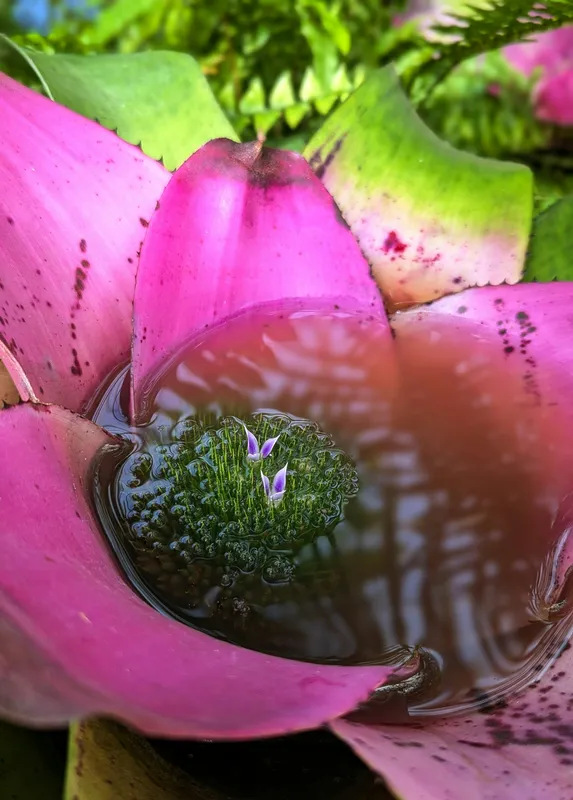
What makes them special is their growth habit. Most bromeliads form a rosette of stiff, arching leaves that create a natural “cup” or “tank” in the center. In the wild, these are epiphytes - they grow on trees in tropical forests, clinging to branches and collecting rainwater and debris in their central cups. They are not parasites. They just use trees as a place to hang out, like that friend who crashes on your couch but at least brings snacks.
Popular Types for Beginners
Not all bromeliads are created equal when it comes to ease of care. Here are the ones I recommend for anyone just starting out.
Guzmania is the one you see everywhere, and for good reason. Bright flower bracts in red, orange, yellow, or pink that last for months. Glossy green leaves. Tolerates medium to lower light better than most bromeliads. If you buy one bromeliad, make it a Guzmania.
Aechmea fasciata (Silver Vase or Urn Plant) has stunning silver-banded leaves and a pink flower spike that looks like modern art. It is a little bigger and bolder than Guzmania, and the bloom can last three to six months. This was the one that made me fall in love with bromeliads.
Vriesea (Flaming Sword) has flat, sword-shaped flower spikes in brilliant reds and yellows. The leaves are often attractively banded or mottled. Prefers a bit more light than Guzmania but still very manageable.
Neoregelia does not have a tall flower spike - instead, the center leaves change color before blooming, turning vivid reds, purples, or pinks. They are more about foliage color than flowers, which some people actually prefer because the color change lasts even longer.
Light Requirements
Here is where bromeliads surprise people. Despite looking tropical and exotic, most of them do not want direct sun. In the wild, they grow under the forest canopy where light is bright but filtered.
For indoor growing, place your bromeliad near an east-facing window where it gets bright morning light without the harsh afternoon rays. A north-facing window works too, especially for Guzmania. If all you have is a south or west window, pull the plant back a few feet or use a sheer curtain.
Signs your bromeliad is getting too much light include pale, bleached-looking leaves or brown, scorched patches. Too little light shows up as dark green leaves that stretch and lose their compact rosette shape, and the plant may refuse to bloom.
One thing I have noticed in my apartment - bromeliads do well in bathrooms with a window. The indirect light plus the humidity from showers makes them very happy.
The Cup Watering Method
This is the fun part that makes bromeliads different from every other houseplant you own. Instead of watering the soil, you water the cup.
That central rosette forms a natural reservoir. In the wild, it catches rainwater, fallen leaves, and the occasional unfortunate insect. At home, your job is to keep that cup about half full of fresh water.
How to water your bromeliad:
- Fill the central cup with room temperature water - about halfway up.
- Every week or two, tip the plant over a sink to dump the old water out completely.
- Rinse the cup and refill with fresh water.
- If the potting mix feels bone dry, give it a light watering too, but do not overdo it.
The rinsing step matters. Stagnant water in the cup can get funky and potentially cause rot. Think of it like changing the water in a flower vase - you would not let that sit for months, right?
Important water tip: If your tap water is hard or heavily chlorinated, let it sit overnight before using it, or use filtered water. Bromeliads can be sensitive to mineral buildup. I learned this the hard way when the leaf tips on my Guzmania started turning brown and crispy.
Soil and Potting
Remember, bromeliads are epiphytes. In nature, their roots grip onto tree bark, not dirt. This means two things for indoor growing: they need excellent drainage, and they do not need much soil at all.
A good bromeliad mix combines equal parts orchid bark, perlite, and peat moss (or coconut coir if you prefer). Basically, you want something that drains fast and stays airy. Regular potting soil holds too much moisture and will rot the roots.
Bromeliads have small, shallow root systems, so they do not need big pots. A pot that seems almost too small is usually just right. Make sure it has drainage holes - this is non-negotiable. Some people grow bromeliads mounted on pieces of driftwood or cork bark with no pot at all, which looks incredible but requires more frequent misting.
Temperature and Humidity
Bromeliads are tropical plants, so they like it warm. Aim for daytime temperatures between 65-80 degrees F (18-27 degrees C). They can handle brief dips to 55 degrees F at night, but anything below 50 degrees F will cause damage.
Keep them away from cold drafts, especially in winter. That spot near the drafty window that your pothos tolerates? Your bromeliad will not be as forgiving.
Humidity is where a lot of people worry, but most common houseplant bromeliads are more adaptable than you would expect. They prefer 50-60 percent humidity, but Guzmania and Aechmea will do fine at 40 percent if they are otherwise healthy. If your home is dry (hello, winter in New York City with the radiator blasting), you can mist the leaves, use a pebble tray, or group your bromeliad with other plants.
Feeding Your Bromeliad
Bromeliads are light feeders. In the wild, they get nutrients from decomposing debris that falls into their cups - leaves, insects, bird droppings. At home, a little fertilizer goes a long way.
During spring and summer, feed once a month with a balanced liquid fertilizer diluted to half strength. You can add it to the cup water or apply it to the soil. Skip fertilizing in fall and winter when growth slows down.
The biggest mistake people make is over-fertilizing. Too much fertilizer can burn the leaves and cause the plant to produce leggy growth with poor color. When in doubt, less is more.
The Bloom Cycle (And What Happens After)
Here is the thing about bromeliads that nobody tells you at the store: the colorful part you bought it for? That flower bract will eventually fade, and then the mother plant slowly dies.
I know. It sounds devastating. But here is the beautiful part - before it goes, it produces babies.
The bromeliad life cycle works like this:
- The plant grows a rosette of leaves for one to three years.
- It sends up a flower spike or the center leaves change color (depending on the type).
- The bloom lasts anywhere from a few weeks to six months.
- After the bloom fades, the plant starts producing offsets called “pups” around its base.
- The mother plant gradually declines over the next several months while the pups grow.
- The pups mature into new plants that will eventually bloom themselves.
How to separate pups:
Wait until the pups are at least one-third the size of the mother plant and have developed their own small root system. Use a clean, sharp knife to cut the pup away from the mother, including some roots. Pot it up in bromeliad mix and keep it warm and humid. It will grow into a full plant in one to two years.
My first Aechmea gave me three pups. One went to my neighbor, one to my office, and one stayed home. Free plants from free plants - it is the best kind of propagation.
Common Problems and Fixes
Brown leaf tips: Usually a water quality issue. Switch to filtered or distilled water, or let tap water sit overnight before using.
Mushy center or base: Root rot from overwatering the soil or stagnant water sitting too long in the cup. Dump and refresh the cup water more frequently. Make sure the pot drains well.
Pale or bleached leaves: Too much direct sunlight. Move the plant to a spot with brighter indirect light instead.
No bloom after years of growth: Some bromeliads need a trigger to bloom. Try the apple trick - place a ripe apple next to the plant and cover both with a clear plastic bag for one to two weeks. The ethylene gas from the apple can trigger blooming. It sounds ridiculous, but it works.
Pests: Bromeliads are relatively pest-resistant, but scale and mealybugs can occasionally show up. Check the leaf bases and cup area. Wipe them off with a cotton swab dipped in rubbing alcohol.
Leaning or tipping over: Bromeliads can be top-heavy, especially when blooming. Use a heavier pot (terra cotta works great) or nestle the plastic pot inside a decorative ceramic one for stability.
Why Bromeliads Are Perfect for Busy Parents
I am going to be real - the reason I ended up loving bromeliads is because they fit into my actual life. I have a toddler. I forget to water things. My apartment does not get perfect light.
Bromeliads do not care. They sit there looking gorgeous for months. The cup holds enough water that if you forget for a week, they are fine. They do not drop leaves all over the floor for your kid to put in their mouth (though they are not considered toxic, you still do not want anyone snacking on them). And when friends come over, they always comment on them because bromeliads just look like you know what you are doing.
The blooms last so long that people think they are fake. I have had guests touch the flower spike on my Aechmea to check. That never gets old.
Getting Started
If you are new to bromeliads, here is what I would do:
- Pick up a Guzmania from your local garden center or grocery store. They are widely available and inexpensive - usually under $15.
- Keep it in its nursery pot and drop it into a decorative container.
- Fill the central cup with filtered water.
- Place it in a spot with bright, indirect light.
- Refresh the cup water every week or two.
That is genuinely it. No complex soil mixes, no precise watering schedules, no grow lights. Just a cup of water and some patience.
When the bloom eventually fades, do not toss the plant. Wait for the pups, separate them, and start the cycle all over again. Before you know it, you will have a whole collection of tropical color that cost you almost nothing.
Welcome to the bromeliad life. Your windowsill is about to get a lot more interesting.