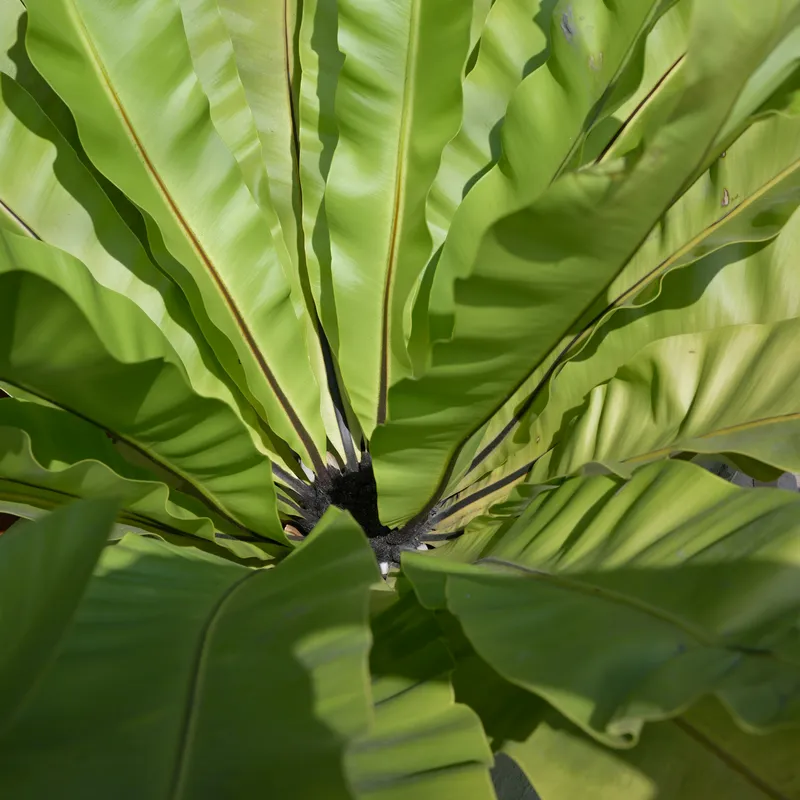
I have a confession. The first time I saw a bird’s nest fern at the nursery, I walked right past it. It did not have the dramatic splits of a monstera or the trailing vines of a pothos. It was just… a rosette of bright green, wavy leaves. “That is it?” I thought.
Then I brought one home, stuck it on the bathroom shelf, and within a few weeks I understood the hype. There is something about the way a bird’s nest fern unfurls a new frond from its center - slowly, tightly coiled, like a little green fiddlehead - that is genuinely mesmerizing. My five-year-old calls it “the plant that hatches.” Which tracks, because the center of the rosette does look exactly like a bird’s nest.
If you are looking for a houseplant that thrives in lower light, loves humidity, and does not require a PhD in plant science to keep alive, the bird’s nest fern (Asplenium nidus) might be your new best friend. Let me walk you through everything I have learned about keeping one happy.
What Is a Bird’s Nest Fern?
The bird’s nest fern is an epiphytic fern native to tropical regions of Southeast Asia, Australia, and East Africa. In the wild, it grows on tree trunks and branches in rainforests, tucked into the crooks where organic debris collects. The rosette shape of the fronds naturally funnels rainwater and falling leaves into its center - basically, it built its own composting system. Pretty clever.
Unlike the staghorn fern (its equally cool cousin), the bird’s nest fern has smooth, undivided fronds that grow in a circular rosette pattern. The fronds are bright apple green, slightly rippled along the edges, and can reach up to three feet long in ideal conditions. Indoors, you will usually see them closer to one to two feet, which is still impressive.
The scientific name Asplenium nidus literally translates to “spleenwort nest” - nidus means nest in Latin. Not the most glamorous etymology, but the common name is much better.
Light Requirements
Here is where the bird’s nest fern really shines (or rather, does not need to). This plant genuinely thrives in medium to low indirect light, making it perfect for those north-facing windows or rooms that do not get a ton of natural sun.
In the wild, these ferns grow under the dense canopy of tropical forests, so they are adapted to filtered, dappled light. Direct sunlight is their enemy - it will scorch the fronds, leaving you with crispy brown edges and pale, washed-out leaves. If you see the fronds turning yellow or developing brown patches, move it away from the window.
The ideal spot is somewhere with bright indirect light, but the plant will absolutely tolerate medium and even low light conditions. Growth will just be slower, which honestly might be fine. Not every plant needs to be in a race.
A few placement ideas that work well:
- A bathroom with a frosted window (humidity bonus)
- A north-facing windowsill
- A shelf a few feet back from an east-facing window
- Under fluorescent or LED grow lights if your apartment is truly a cave
One of mine lives on top of the medicine cabinet in our bathroom, and it has never been happier. The combination of indirect light from a small window plus all that shower steam? Chef’s kiss.
Watering: The Trickiest Part
If there is one thing that trips people up with bird’s nest ferns, it is watering. Not because the schedule is complicated, but because of how you water matters just as much as when.
The golden rule: never pour water directly into the center rosette. I know it looks like a natural funnel (and in the wild, it does collect rainwater), but indoors, water sitting in the center can cause the new emerging fronds to rot. And those new fronds? Those are the whole show. That is where the magic happens. Protect them at all costs.
Instead, water around the edges of the soil, letting it soak in evenly. Aim to keep the soil consistently moist but not soggy. Think of a wrung-out sponge - damp but not dripping.
Here is my watering routine:
- Check the soil every 4-5 days by sticking my finger about an inch deep
- If the top inch feels dry, it is time to water
- Water slowly around the outer edge of the pot until it drains from the bottom
- Empty the saucer after about 15 minutes so the roots are not sitting in water
- In winter, back off a bit - maybe every 7-10 days
Water quality matters too. Bird’s nest ferns can be sensitive to chlorine and mineral buildup in tap water. If your tap water is heavily treated, consider using filtered water or letting tap water sit out overnight before using it. I keep a watering can filled on the counter and use it the next day. It takes 10 seconds of extra effort and makes a difference.
Humidity: The Secret Weapon
This is where the bird’s nest fern really separates itself from other beginner-friendly plants. It wants humidity. Lots of it. We are talking 50 to 80 percent, which is higher than most homes provide, especially in winter when the heat is running.
If your home is on the drier side (and if you live in a place with real winters like I do in New York, it probably is from November through March), you have a few options:
The bathroom strategy. Seriously, just put it in the bathroom. The steam from showers creates a naturally humid microclimate, and most bathrooms have the kind of indirect light these ferns love. It is the easiest hack I know. My bathroom fern has not gotten a single brown tip in over a year.
Pebble tray. Fill a shallow tray with pebbles, add water until it is just below the top of the pebbles, and set your pot on top. As the water evaporates, it creates a little humidity bubble around the plant. It is not dramatic, but it helps.
Humidifier. If you are already running a humidifier for your calathea collection (no judgment), your bird’s nest fern will be very grateful to sit nearby.
Group your plants. Plants release moisture through transpiration, so clustering your humidity-loving plants together creates a more humid microenvironment. I have a little tropical corner with my calathea, fittonia, and bird’s nest fern, and they all seem happier for it.
What to avoid: misting directly onto the fronds. I know, I know - everyone recommends misting. But for bird’s nest ferns, water droplets sitting on the fronds can lead to fungal issues, and you do not want to accidentally spray into that center rosette. If you mist, aim for the air around the plant, not the leaves themselves.
Soil and Potting
Bird’s nest ferns like a rich, well-draining potting mix that retains some moisture without getting waterlogged. Think “forest floor” - organic, slightly acidic, and loose enough for air to reach the roots.
A good mix for bird’s nest ferns:
- Standard indoor potting soil as the base
- A generous handful of perlite for drainage
- Some orchid bark or coco coir for aeration and moisture retention
You can also use a premixed African violet or fern potting mix, which tends to be peat-heavy and slightly acidic - both things this fern appreciates.
For pots, go with something that has a drainage hole (non-negotiable) and is only slightly larger than the root ball. Bird’s nest ferns have relatively small root systems for their size, so they do not need huge pots. A pot that is too large holds excess moisture, which can lead to root rot.
I typically repot every two years, or when I notice roots circling the bottom of the pot. Spring is the best time to repot, right when the plant is entering its active growing season.
Temperature
Bird’s nest ferns prefer temperatures between 60 and 80 degrees Fahrenheit, which conveniently overlaps with “normal indoor temperature.” They are not cold hardy at all - anything below 50 degrees can cause damage, and frost is a death sentence.
The bigger concern is drafts. Keep your fern away from:
- Air conditioning vents (cold and dry - a double whammy)
- Heating vents (warm and dry - equally bad)
- Exterior doors that get opened frequently in winter
- Leaky windows
Temperature consistency matters more than hitting a perfect number. These plants do not like sudden swings, so find a stable spot and leave it there.
Fertilizing
Bird’s nest ferns are light feeders. Over-fertilizing is actually one of the more common mistakes I see, and it shows up as brown, crispy edges on the fronds - which looks a lot like a humidity problem and can send you on a wild goose chase.
During the growing season (spring through early fall), feed once a month with a balanced liquid fertilizer diluted to half strength. I use a standard 10-10-10 or 20-20-20 at half the recommended dose and have never had an issue.
In fall and winter, stop fertilizing entirely. The plant’s growth slows down significantly, and fertilizer just builds up in the soil without being used. This salt buildup can burn the roots and damage those beautiful fronds.
If you notice a white crusty residue on the soil surface, that is mineral buildup from fertilizer or hard water. Flush the soil by running water through it for a few minutes, letting it drain completely. Do this once every few months as preventive maintenance.
Common Problems and How to Fix Them
Brown, Crispy Frond Edges
This is the number one complaint with bird’s nest ferns, and the culprit is almost always low humidity. Before you do anything else, check your humidity levels. If you do not have a hygrometer (those little humidity meters you can get for under $10), get one. It takes the guesswork out of the equation.
Other possible causes: underwatering, too much direct sun, or over-fertilizing. Work through them one at a time.
Yellowing Fronds
Older fronds naturally yellow and die back - that is normal. The plant is redirecting energy to new growth. Just trim them off at the base with clean scissors.
If newer fronds are yellowing, check for overwatering. Pull the plant out of the pot and inspect the roots. Healthy roots are firm and light-colored. Mushy, dark roots mean root rot, and you will need to trim the damaged roots, let them dry, and repot in fresh soil.
Pale or Washed-Out Fronds
Too much light. Move it to a shadier spot. The fronds should be a rich, bright green. If they look bleached or faded, the plant is telling you it is getting more light than it can handle.
No New Growth
In winter, this is completely normal. Bird’s nest ferns slow way down in the colder months. If it is spring or summer and you are seeing no new fronds unfurling from the center, check that you are watering consistently and providing enough humidity. Sometimes a gentle dose of fertilizer can kick things into gear.
Pests
Bird’s nest ferns are not hugely pest-prone, but scale insects and mealybugs can occasionally show up. Check the undersides of fronds and along the midrib regularly. If you spot pests, wipe them off with a damp cloth dipped in rubbing alcohol, or use insecticidal soap. Avoid neem oil on ferns - it can damage the fronds.
A Note on Propagation
Here is the honest truth: propagating bird’s nest ferns at home is not really practical. Unlike pothos or philodendrons, you cannot just snip a cutting and stick it in water. Bird’s nest ferns reproduce through spores (those brown lines on the undersides of mature fronds), and growing ferns from spores is a slow, finicky process that requires very specific conditions.
If you want more bird’s nest ferns, your best bet is to buy another one. They are widely available and usually pretty affordable. Sometimes a mature plant will produce offsets (baby plants) at its base, and you can carefully separate these during repotting. But do not count on it - it is more of a happy bonus than a reliable propagation method.
Why I Think Everyone Should Try One
Look, I get it. The bird’s nest fern does not have the internet celebrity status of a monstera or the dramatic trailing effect of a string of pearls. But it is one of the most rewarding plants I own, and here is why.
It is forgiving. It is beautiful year-round. It does not need bright light (a genuine blessing for apartment dwellers). And there is something meditative about watching a new frond slowly unfurl from the center of the rosette over the course of a week or two. My kids love checking on it every morning to see how much the new “baby leaf” has uncurled.
If you have a bathroom that could use some greenery, or a shady corner that has defeated every plant you have tried, give the bird’s nest fern a shot. It might just surprise you like it surprised me.
Quick Care Reference
- Scientific name: Asplenium nidus
- Light: Medium to low indirect light. No direct sun.
- Water: Keep soil consistently moist. Water around edges, never into center rosette.
- Humidity: 50-80%. Bathroom placement is ideal.
- Temperature: 60-80 degrees Fahrenheit. Avoid drafts and sudden temperature changes.
- Soil: Well-draining, slightly acidic mix with perlite and bark.
- Fertilizer: Half-strength balanced fertilizer monthly in spring and summer only.
- Toxicity: Non-toxic to cats and dogs - safe for pet households.
- Difficulty: Beginner-friendly with attention to humidity.