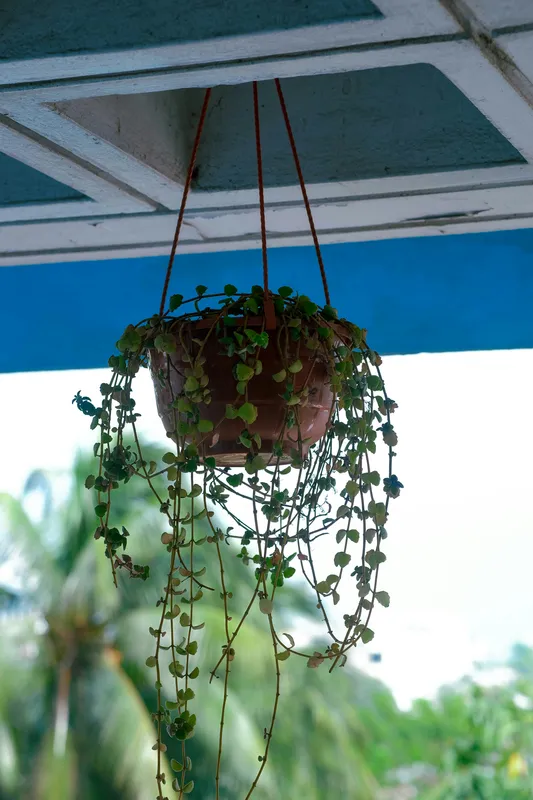
Why Trailing Plants Hit Different
There is a moment - and every plant person knows it - when a vine finally drapes over the edge of a shelf and starts dangling into open air. It feels like your plant has graduated from “surviving” to “thriving.” Trailing plants bring vertical drama to a room in a way that no amount of careful furniture arrangement can match. They soften hard edges, fill empty corners, and make even the most basic IKEA shelf look like it belongs in a botanical garden.
I got into trailing plants almost by accident. My wife put a Pothos on top of the kitchen cabinets because we had run out of counter space (three-year-olds and breakable pots do not mix). Within a few months, it had sent vines cascading down the side of the cabinet, and our kitchen looked like the entrance to some kind of jungle temple. My kid started calling it “the vine house.” I was hooked.
If you are looking to add some trailing magic to your own space, this guide covers my favorite trailing houseplants for every light level and skill level. I have grown all of these in our New York City apartment, and I will be straight with you about which ones are easy and which ones will test your patience.
The Easy Ones (Start Here If You Are a Beginner)
Pothos (Epipremnum aureum)
If I could only recommend one trailing plant to a new plant parent, it would be Pothos every single time. This plant is practically indestructible. It handles low light, bright indirect light, irregular watering, and even the occasional toddler yanking on its leaves. The vines can grow several feet long, and it comes in a bunch of beautiful varieties - Golden Pothos, Marble Queen, Neon, Jade, and more.
Put it on a high shelf or in a hanging planter and let it do its thing. Water when the top inch of soil is dry, and you are good. The only way to really kill a Pothos is to overwater it consistently or leave it in standing water. If you manage to keep it alive for a few months (you will), it is also one of the easiest plants to propagate from cuttings - free plants for your friends.
Best for: Beginners, low-light rooms, kitchen cabinets, bathroom shelves Light: Low to bright indirect Water: When the top inch of soil feels dry Growth rate: Fast - expect several feet of growth per year in good conditions
Spider Plant (Chlorophytum comosum)
Spider Plants are the plant equivalent of a golden retriever - cheerful, low-maintenance, and always producing babies. Literally. A happy Spider Plant sends out long arching stems (called stolons) with little plantlets dangling at the ends, creating a cascading effect that looks fantastic in a hanging basket.
These are great for families because they are non-toxic to cats and dogs, which is not something you can say about a lot of trailing plants. They handle a range of light conditions and are pretty forgiving about watering, though they will let you know if they are thirsty by going a bit pale.
Best for: Families with pets, hanging baskets, bright rooms Light: Bright indirect to medium (tolerates low light but grows slower) Water: When the top half of soil is dry - they store water in their thick roots Growth rate: Moderate, but the baby plantlets add visual drama quickly
Tradescantia Zebrina (Wandering Dude)
If you want color, this is your plant. Tradescantia Zebrina has stunning purple and silver striped leaves that shimmer in the light. It grows fast - almost aggressively fast - and trails beautifully over the edge of any shelf or planter. I have a pot on our bookshelf that went from a few cuttings to a full, cascading display in about four months.
The trade-off is that Tradescantia can get leggy over time. The older stems near the base lose leaves and start looking bare. The fix is simple: take cuttings from the healthy tips, root them in water for a week, and stick them back in the pot to fill it out. Think of it as a haircut and a replanting all in one.
Best for: Anyone who wants fast, colorful results Light: Bright indirect (more light means more vibrant color) Water: When the top inch of soil is dry - do not let it sit soggy Growth rate: Very fast
The Crowd Favorites (A Little More Attention Needed)
String of Hearts (Ceropegia woodii)
String of Hearts is probably the most photogenic trailing plant out there. Delicate heart-shaped leaves in silver-green with pink undertones, dangling on thin, thread-like stems. It looks like something out of a fairy tale, and it is a favorite gift for Valentine’s Day for good reason.
Despite its delicate appearance, String of Hearts is actually a semi-succulent, which means it stores water in its leaves and tuber. It prefers to dry out between waterings and does best in bright light. The number one killer of this plant is overwatering - if the soil stays wet too long, the stems rot at the base and the whole thing unravels. Use a well-draining succulent mix and a pot with a drainage hole, and you will be fine.
Best for: Bright windowsills, high shelves, gifts Light: Bright indirect to some direct morning sun Water: Let soil dry out completely between waterings Growth rate: Moderate - vines can reach several feet but it takes some time
Hoya (Various Species)
Hoyas are having a major moment right now, and honestly, they deserve it. These waxy-leaved trailing plants are beautiful, long-lived, and reward patient growers with clusters of fragrant, star-shaped flowers. Hoya carnosa and Hoya pubicalyx are great starter species - they trail nicely, tolerate lower light, and are not too fussy about watering.
The thing about Hoyas is they grow slowly at first. Like, you might stare at yours for months wondering if it is even alive. Then one day it wakes up and starts pushing out new growth like it has somewhere to be. Once established, they are incredibly low-maintenance and can live for decades. My mom has a Hoya carnosa that she has kept alive since before I was born, and it blooms every summer in her kitchen window.
Best for: Patient plant parents, bright rooms, long-term investment Light: Bright indirect (need good light to flower) Water: Let soil dry out between waterings - they are epiphytic and hate wet feet Growth rate: Slow to start, then moderate once established
English Ivy (Hedera helix)
English Ivy gives you that classic, old-world cascading vine look. It is a vigorous grower that trails and climbs with equal enthusiasm, and it works great in hanging baskets where it can drape down freely. The smaller-leaved varieties like ‘Glacier’ and ‘Needlepoint’ look especially nice on shelves.
Fair warning: Ivy can be a bit of a diva indoors. It likes cool temperatures, good air circulation, and consistent moisture. It is also a magnet for spider mites, especially in heated winter apartments. Keep an eye on the undersides of the leaves and give it a good shower every few weeks to keep pests at bay. If you can meet its needs, though, it rewards you with lush, dense growth that looks incredible.
Best for: Cool rooms, bathrooms, north-facing windows Light: Medium to bright indirect Water: Keep soil evenly moist but not waterlogged Growth rate: Fast once it is happy
The Showstoppers (For When You Want a Challenge)
String of Pearls (Curio rowleyanus)
String of Pearls looks like nothing else in the plant world - round, bead-like leaves strung along thin stems, spilling out of a pot like a green waterfall. It is one of those plants that makes visitors say, “Wait, that is real?”
I will be honest: I have killed more than one String of Pearls. They are succulents that want bright light, excellent drainage, and very infrequent watering. Overwater them even slightly and they turn to mush. Underwater them and the pearls shrivel up and fall off. The sweet spot exists, but it is narrow. A terra cotta pot, a gritty succulent mix, and a bright south-facing window are your best friends here.
Best for: Bright, sunny spots with experienced plant parents Light: Bright indirect to direct morning sun Water: Only when the pearls start to look slightly oval instead of round Growth rate: Moderate when conditions are right
Scindapsus Pictus (Satin Pothos)
Despite the common name, Scindapsus Pictus is not actually a Pothos - but it has a similar trailing habit with an upgrade in the looks department. The leaves are velvety to the touch with silver splotches that sparkle when they catch the light. It grows a bit slower than true Pothos and prefers slightly higher humidity, but it is not dramatically more difficult.
The ‘Exotica’ and ‘Argyraeus’ varieties are both gorgeous. Give them a spot with bright indirect light and let the soil dry out a bit between waterings. They do not love being bone dry for long stretches the way succulents do, so check on them regularly.
Best for: Plant parents ready to level up from basic Pothos Light: Bright indirect (maintains better variegation) Water: When the top inch or two of soil is dry Growth rate: Moderate
Practical Tips for Displaying Trailing Plants
Shelf Placement Matters
Not all shelf spots are created equal. Here is what I have learned from trial and error:
- Top shelves near windows get the best light but are hard to reach for watering. Pick low-maintenance plants like Pothos or Hoya for these spots.
- Middle shelves are great for plants that need more attention since you can actually see and reach them. String of Hearts and Scindapsus do well here.
- Leave vertical space. Trailing plants need room to hang. At minimum, leave 12 to 18 inches between the bottom of your pot and the next shelf down, or the vines will bunch up and block light from their own leaves.
Watering High-Up Plants Without Making a Mess
This is the real challenge with trailing plants on shelves. My method: I take the pots down to the sink every watering day. Yes, it is a little more work. But it means I can water thoroughly, let them drain completely, and check for pests while I am at it. For hanging baskets, I use a long-spout watering can and water slowly, or I take the whole basket to the bathtub.
Ice cubes are not a substitute for proper watering, despite what some people on the internet will tell you.
Pinching and Pruning for Fullness
A common mistake with trailing plants is letting them grow endlessly without ever pruning. Long, leggy vines with sparse leaves are not the look you want. Pinch back the growing tips regularly - this encourages the plant to branch out and fill in at the base. Take those cuttings, root them in water, and stick them back in the pot. This is the secret to those full, bushy trailing plants you see in magazines.
Which One Should You Start With?
If you are brand new to plants, get a Pothos. Seriously. It is cliche advice because it is correct advice. Once you have kept a Pothos alive for six months and successfully propagated a cutting, you will have the confidence to try anything else on this list.
If you already have some plant experience and want something with more personality, go for a String of Hearts or a Hoya. They reward attention and patience with some of the most beautiful growth you will see from any houseplant.
And if you are the kind of person who loves a challenge and a good south-facing window, grab a String of Pearls and see what happens. Just do not say I did not warn you.
Happy trailing.