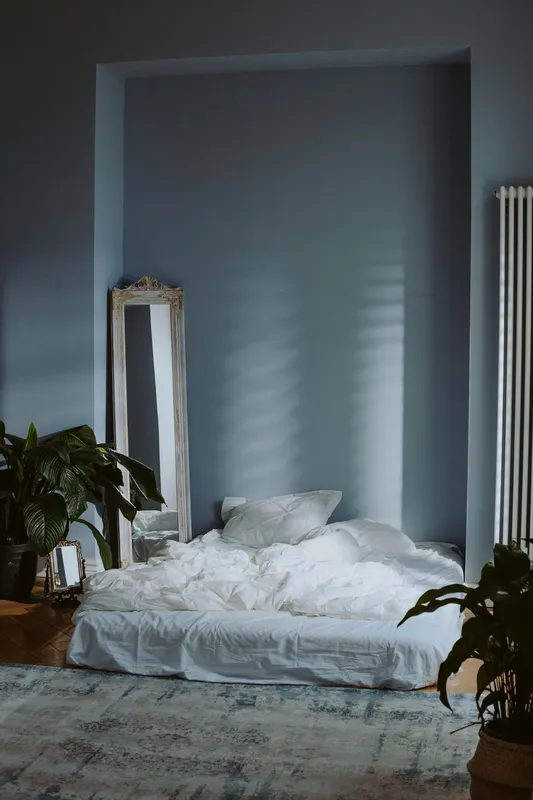
Let me tell you about the time I tried to turn our bedroom into a jungle.
It was right after Lily was born, during those hazy newborn weeks when sleep was a distant memory and every parenting article said the same thing: improve your sleep environment. So naturally, instead of buying blackout curtains like a normal person, I went to the nursery and came home with six plants.
My wife looked at the collection on the dresser and said, “We can barely keep the baby alive right now.” She had a point.
Three of those plants died within a month. The other three? They are still in our bedroom, and I am now convinced that choosing the right bedroom plant is less about aesthetics and more about finding a plant that thrives on neglect in a dim corner.
Here is what I have learned.
First, Let Us Talk About the “Air Purifying” Thing
You have probably seen those lists claiming that houseplants will purify your bedroom air while you sleep. They all trace back to a 1989 NASA study that tested plants in sealed chambers and found they could remove volatile organic compounds (VOCs) like formaldehyde and benzene.
Here is the part those articles leave out: the NASA study used sealed, airtight chambers. Your bedroom has windows, doors, HVAC, and air exchange happening constantly. Researchers have since calculated that you would need somewhere between 10 and 1,000 plants per square meter of floor space to match the air purification that normal ventilation provides.
So no, three pothos on your nightstand are not going to replace your air purifier.
That said, plants in the bedroom are not useless. Far from it. They add humidity, which helps if you run heat in winter. They reduce stress - there is solid research showing that simply being around greenery lowers cortisol levels. And they make your bedroom feel like a place you actually want to be, which is half the battle when you are trying to wind down after a long day of parenting.
Just set realistic expectations. You are adding plants for the vibes and the mild humidity boost, not because they are an oxygen factory.
What Makes a Good Bedroom Plant
Before I get into specific plants, here is what I look for in a bedroom plant:
Low-light tolerance. Most bedrooms do not get the bright, indirect light that tropical plants crave. You are dealing with a north-facing window, a window partly blocked by the building next door, or no window at all. Your plant needs to handle that.
Quiet maintenance. I do not want a plant that needs daily misting or weekly fertilizing in the room where I sleep. Bedroom plants should be the low-drama members of your collection.
No strong fragrance. This is personal, but I find that flowering plants with heavy scents can be overwhelming in a closed bedroom. Save the jasmine for the living room.
Pet and kid safety. If you have cats that jump on everything or toddlers who grab leaves, toxicity matters. I will note which plants below are pet-safe.
The Best Bedroom Plants (Ranked by Neglect Tolerance)
1. Snake Plant (Sansevieria trifasciata)
If I could only recommend one bedroom plant for the rest of my life, it would be the snake plant. This is not an exciting choice. It is not trendy. But it is the plant equivalent of a Honda Civic - reliable, efficient, and impossible to kill under normal circumstances.
Snake plants tolerate low light, infrequent watering, and dry air. They are also CAM plants, which means they perform a special type of photosynthesis where they open their stomata at night instead of during the day. In practical terms, they absorb a tiny bit of CO2 while you sleep. It is not going to transform your air quality, but it is a nice bonus.
Water every two to three weeks. Less in winter. Seriously, the number one way people kill snake plants is overwatering.
Pet note: Mildly toxic to cats and dogs if ingested. If your cat is a leaf chewer, skip this one.
2. Pothos (Epipremnum aureum)
Pothos is the plant that started my whole plant obsession, and it remains one of the best bedroom choices. It handles low light gracefully - the variegation may fade a bit, but the plant will keep growing. You can trail it from a high shelf, train it along a wall, or just let it do its thing in a pot on the nightstand.
Water when the top inch of soil is dry, which in a bedroom is usually once a week or less. If you forget for two weeks, it will droop dramatically to guilt-trip you, then bounce back within hours of watering.
Pet note: Toxic to cats and dogs. Keep it high on a shelf if you have curious pets.
3. ZZ Plant (Zamioculcas zamiifolia)
The ZZ plant looks like it belongs in a magazine spread, with its glossy, dark green leaves arranged in neat rows along thick stems. But its real superpower is surviving conditions that would kill most houseplants.
Low light? Fine. Forgot to water it for a month? Its thick rhizomes store water underground. Bone-dry apartment air in winter? No problem.
I keep one on my dresser where it gets almost no direct light, and it has been slowly but steadily putting out new growth for two years. It is a CAM plant like the snake plant, so it does its gas exchange at night.
Water every three to four weeks. When in doubt, wait another week.
Pet note: Mildly toxic if ingested. The “Raven” variety with near-black leaves is stunning if you want something dramatic.
4. Spider Plant (Chlorophytum comosum)
Spider plants have a retro reputation, and I think that is unfair. They are genuinely excellent bedroom plants. They tolerate a range of light conditions, they are non-toxic to pets and kids, and they produce baby plantlets that dangle from the mother plant like little green spiders - which is either charming or creepy depending on your perspective.
My daughter loves ours. She calls it “the plant with babies,” and honestly, that is a better name.
Spider plants appreciate a bit more water than the others on this list - about once a week - and they will let you know if the air is too dry by developing brown tips. But they are forgiving of mistakes and nearly impossible to kill outright.
Pet note: Non-toxic. This is your safest bet if you have cats, dogs, or grabby toddlers.
5. Peace Lily (Spathiphyllum)
The peace lily is one of the few bedroom plants that will actually flower in low light. The white blooms are elegant and understated, and the dark green leaves add a lush feeling to a room.
Fair warning: peace lilies are more communicative than the other plants on this list. When they need water, they will droop so dramatically you will think they are dead. They are not. Give them a drink and they will perk up within an hour. It is annoying and endearing in equal measure, like a toddler who cries because you gave them the wrong color cup.
They do appreciate slightly more humidity than the average bedroom provides, so if you keep one, consider placing it on a pebble tray or near the bathroom door.
Pet note: Toxic to cats and dogs. The sap contains calcium oxalate crystals that cause mouth irritation.
6. Cast Iron Plant (Aspidistra elatior)
This plant is called the cast iron plant because it is nearly indestructible. It was popular in Victorian parlors, where it survived gas lighting fumes, coal dust, and minimal care. If it can handle that, it can handle your bedroom.
Cast iron plants grow slowly, tolerate very low light, and need watering only every two weeks or so. They are not flashy, but they have a quiet dignity to them - broad, dark green leaves that arch gracefully from the soil.
My grandmother kept one in her apartment in Flushing. It sat in a dark hallway by the kitchen and somehow looked the same for twenty years. That is the energy you want in a bedroom plant.
Pet note: Non-toxic. Safe for the whole family.
7. Aloe Vera
Aloe is a CAM plant, so it does its gas exchange at night. It is also extremely low-maintenance, stores water in its thick leaves, and is useful - you can snap off a leaf for minor burns or skin irritation.
The catch: aloe needs more light than the others on this list. If your bedroom gets a few hours of direct sunlight or bright indirect light, it will do well. In a dark room, it will slowly stretch and get leggy.
Water deeply but infrequently. Every two to three weeks in the growing season, less in winter. The soil should dry out completely between waterings.
Pet note: Toxic to cats and dogs. The latex layer beneath the skin can cause digestive upset.
Placement Tips for Bedroom Plants
Where you put your plants matters almost as much as which plants you choose.
Near the window, not on the nightstand. I know it looks nice to have a plant right next to your bed, but most plants - even low-light ones - will do better within a few feet of whatever light source your room has.
Elevate them if you have pets or kids. High shelves, wall-mounted planters, and hanging pots keep plants out of reach. This also gives trailing plants like pothos room to cascade, which looks great.
Use the top of a dresser or bookshelf. These are often close to windows and provide a stable surface. Just put a saucer under the pot to protect the furniture.
Avoid placing plants directly over your bed. One, because soil and water near where you sleep is asking for trouble. Two, because I once knocked a small pot off a shelf at 2 AM and spent the next twenty minutes picking soil out of the sheets while my wife gave me the look.
How Many Plants Should You Put in Your Bedroom?
There is no magic number, but I would say start with two or three. Enough to make the room feel green and alive, but not so many that your bedroom becomes a greenhouse.
If you are just starting out, grab a snake plant and a pothos. Those two together will give you an upright architectural plant and a trailing one, which covers your visual variety. Add a spider plant if you have pets and want something non-toxic.
As you get more comfortable, you can add more. I am currently at seven plants in our bedroom, which my wife says is five too many. She is probably right, but the ZZ plant on the dresser stays.
Common Mistakes With Bedroom Plants
Overwatering. Bedrooms tend to be cooler and get less light than living rooms, which means soil stays moist longer. Adjust your watering schedule down from whatever you are doing in brighter rooms.
Ignoring dust. Bedroom plants collect dust on their leaves, which blocks the little light they are getting. Wipe leaves down with a damp cloth every few weeks. It takes two minutes and makes a noticeable difference.
Picking plants for looks alone. That gorgeous calathea you saw on Instagram? It wants humidity, consistent moisture, and bright indirect light. It will not be happy in most bedrooms. Trust me, I have tried.
Forgetting to rotate. Plants in low light will lean toward the window. Give them a quarter turn every time you water to keep them growing evenly.
The Bottom Line
The best bedroom plant is the one you will not kill. That sounds obvious, but I have watched enough friends buy finicky plants for their bedrooms, watch them decline, and then decide they are “bad at plants.”
You are not bad at plants. You just put a humidity-loving tropical in a dry, dark room and expected it to thrive. Start with something forgiving - a snake plant, a pothos, a ZZ plant - and let it prove to you that keeping plants alive is not that hard.
Then, once you have built that confidence, you can start eyeing the calatheas. But keep those in the living room.