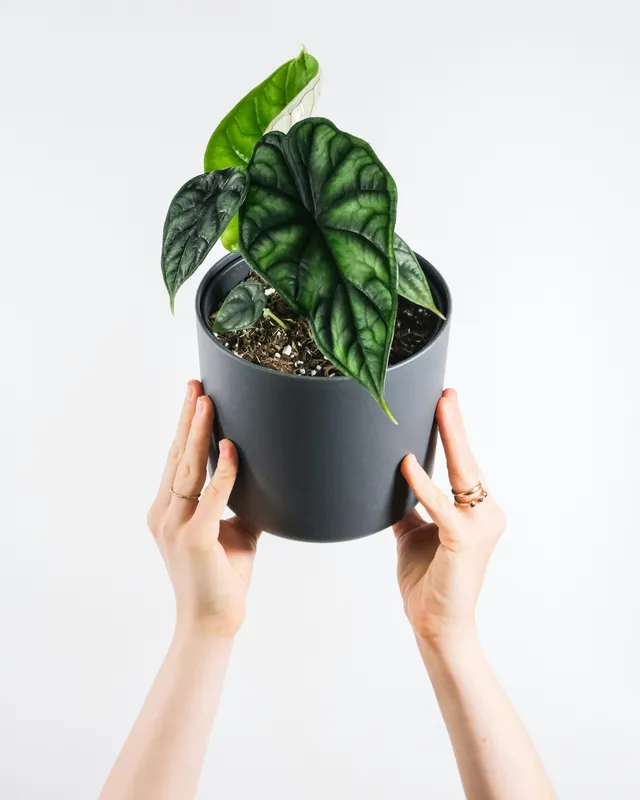
Alocasia Dragon Scale Care: The Metallic Alocasia
Alocasia Dragon Scale (Alocasia baginda ‘Silver Dragon’) is one of the most unique alocasias you can grow. The leaves are thick, silvery-green, and metallic with dark green veins that look like dragon scales. The texture is almost reptilian — run your finger across the leaf and you can feel the ridges.
Like all alocasias, Dragon Scale is not a beginner plant. It demands high humidity, consistent care, and goes dormant in winter. But if you are a collector looking for something rare and stunning, this is it. A well-cared-for Dragon Scale is a conversation starter every single time.
Quick Care Summary
- Light: Bright, indirect light
- Water: When top inch of soil is dry
- Humidity: 60 to 80 percent (high)
- Soil: Well-draining, chunky aroid mix
- Growth habit: Compact, upright, stays relatively small
- Biggest challenge: High humidity requirements and winter dormancy
- Toxicity: Toxic to pets and humans
Light
Alocasia Dragon Scale needs bright, indirect light to maintain its metallic sheen and compact growth. The silvery coloring that makes this plant special depends on adequate light — in dim conditions, the leaves lose their luster and turn a dull green.
Best light:
- East-facing window where it gets gentle morning sun
- A few feet back from a south or west window with filtered light
- Under a grow light for 10 to 12 hours a day if natural light is limited
Signs of too little light:
- Smaller new leaves than previous ones
- Metallic sheen fades to a flat matte green
- Slower growth and elongated petioles (the plant stretches toward light)
- Fewer new leaves overall
Signs of too much light:
- Faded, washed-out leaves that lose their deep veining
- Brown, scorched edges or pale spots on the leaf surface
- Leaves curling inward to protect themselves from intense light
Dragon Scale does not tolerate direct afternoon sun. Even an hour of harsh direct light can cause leaf burn on this thin-skinned alocasia.
Watering
Water when the top inch of soil is dry. Dragon Scale likes consistent moisture but absolutely does not tolerate soggy soil. The roots are prone to rot, especially during cooler months when the plant is not actively growing.
How to water:
- Check the top inch of soil with your finger
- If dry, water thoroughly until water drains from the bottom
- Empty the saucer within 15 to 20 minutes
- Never let the pot sit in standing water
Typical schedule:
- Growing season (spring and summer): Every 5 to 7 days, depending on pot size and humidity
- Dormant season (fall and winter): Reduce watering significantly, possibly to every 10 to 14 days. The plant is using much less water during dormancy.
Water quality matters. Dragon Scale is sensitive to minerals and chemicals in tap water. If your tap water is hard or heavily chlorinated, use filtered water or let tap water sit out overnight before using. Brown leaf tips can be a sign of water quality issues.
Humidity
High humidity is non-negotiable for Alocasia Dragon Scale. This is the single most important factor in keeping this plant healthy and is the main reason people struggle with it.
Ideal humidity: 60 to 80 percent.
How to increase humidity:
- Use a humidifier — this is the most reliable option. Place it near the plant and run it daily during the growing season and whenever your home heating is on.
- Place in a humid bathroom that has a window for light
- Group with other tropical plants to create a microclimate with shared transpiration
- Use a pebble tray filled with water under the pot (the pot should sit on the pebbles, not in the water)
What does not work well:
- Misting. It provides temporary humidity that evaporates in minutes and can leave water sitting on leaves, which invites fungal issues.
- Placing the plant far from a humidifier. Humidity drops off quickly with distance.
Signs of low humidity:
- Brown, crispy leaf edges that start at the tips and move inward
- Leaves curling inward or downward
- Spider mites, which thrive in dry air and love alocasias
- New leaves emerging smaller or deformed
If you live in a dry climate or run central heating in winter, a humidifier is essentially required to keep this plant looking good.
Soil and Pot
Dragon Scale needs well-draining, airy soil that retains some moisture but never stays waterlogged. Standard potting mix is too dense and holds too much water for this plant’s sensitive roots.
Best soil mix:
- 40% potting soil
- 30% orchid bark (for drainage and air pockets)
- 20% perlite (for additional drainage)
- 10% peat moss or coco coir (for moisture retention)
This mix provides the balance Dragon Scale needs: enough moisture to keep the roots hydrated between waterings, but enough drainage that water moves through quickly and roots have access to oxygen.
Pot requirements:
- Must have drainage holes. No exceptions.
- Not too large — Dragon Scale has a compact root system and a pot that is too big holds excess moisture
- Terracotta is a good choice because it breathes and helps the soil dry more evenly
- Go up only one inch in diameter when repotting
Temperature
- Ideal temperature: 65 to 80 degrees Fahrenheit
- Minimum: 60 degrees. Below this, the plant may enter dormancy or suffer cold damage.
- Avoid: Cold drafts from windows, exterior doors, and air conditioning vents. Also avoid placing near heating vents, which create hot, dry air.
Dragon Scale is a tropical plant from Borneo and does not tolerate temperature swings well. Keep conditions as stable as possible.
Fertilizer
- Fertilize every 2 to 4 weeks in spring and summer with a balanced liquid fertilizer
- Always dilute to half the recommended strength. Alocasias are sensitive to fertilizer burn.
- Skip fertilizing completely in fall and winter during dormancy
- If you see salt buildup on the soil surface (white crust), flush the soil thoroughly with plain water
Winter Dormancy
Alocasia Dragon Scale often goes dormant in winter, especially in cooler homes or rooms with less light. This is a natural response, not a sign that you did something wrong.
What dormancy looks like:
- Existing leaves yellow and die back, sometimes all of them
- No new growth for several weeks or months
- The corm (bulb) below the soil remains alive
How to handle dormancy:
- Reduce watering significantly — just enough to keep the soil from going bone dry
- Stop fertilizing entirely
- Keep the plant in a warm spot (above 60 degrees) with indirect light
- Do not repot or disturb the plant
- Be patient. New growth will emerge in spring when light and temperatures increase.
If all leaves drop, resist the urge to throw the plant away. Check the corm — if it is firm and not mushy, the plant is alive and will regrow. Some growers store dormant alocasia corms in a bag of slightly damp perlite in a warm spot until spring.
Common Problems
Metallic sheen fading
Not enough light. Move to a brighter spot with indirect light. The silvery coloring depends on adequate light levels.
Brown leaf edges
Low humidity is the most common cause. Use a humidifier and aim for 60 percent or higher. Also check water quality — hard water and chlorine cause similar symptoms.
Yellow leaves
Could be overwatering, natural dormancy, or the plant dropping an older leaf to support a new one. Check soil moisture first. If the soil is soggy, reduce watering and check roots for rot.
Spider mites
Very common on alocasias, especially in dry air. Inspect the undersides of leaves weekly. Fine webbing and tiny dots are signs of mites. Treat with neem oil or insecticidal soap and increase humidity to prevent recurrence.
Root rot
Caused by overwatering or soil that stays too wet. Symptoms include mushy stems, foul smell from the soil, and rapid leaf yellowing. Unpot immediately, trim away soft brown roots, and repot in fresh dry mix. Let the soil dry before watering again.
Toxicity
Alocasia Dragon Scale is toxic to cats, dogs, and humans. All parts of the plant contain calcium oxalate crystals that cause irritation of the mouth, tongue, and throat if ingested. Keep out of reach of children and pets.
What To Do Next
- If you love rare alocasias, try Alocasia Black Velvet (velvety dark leaves) or Alocasia Frydek (green velvet with white veins)
- If Dragon Scale is too fussy for your conditions, try Syngonium or Philodendron, which offer interesting foliage with much easier care
- If your Dragon Scale goes dormant, reduce watering, stop fertilizing, and wait for spring regrowth. The corm is tougher than it looks.