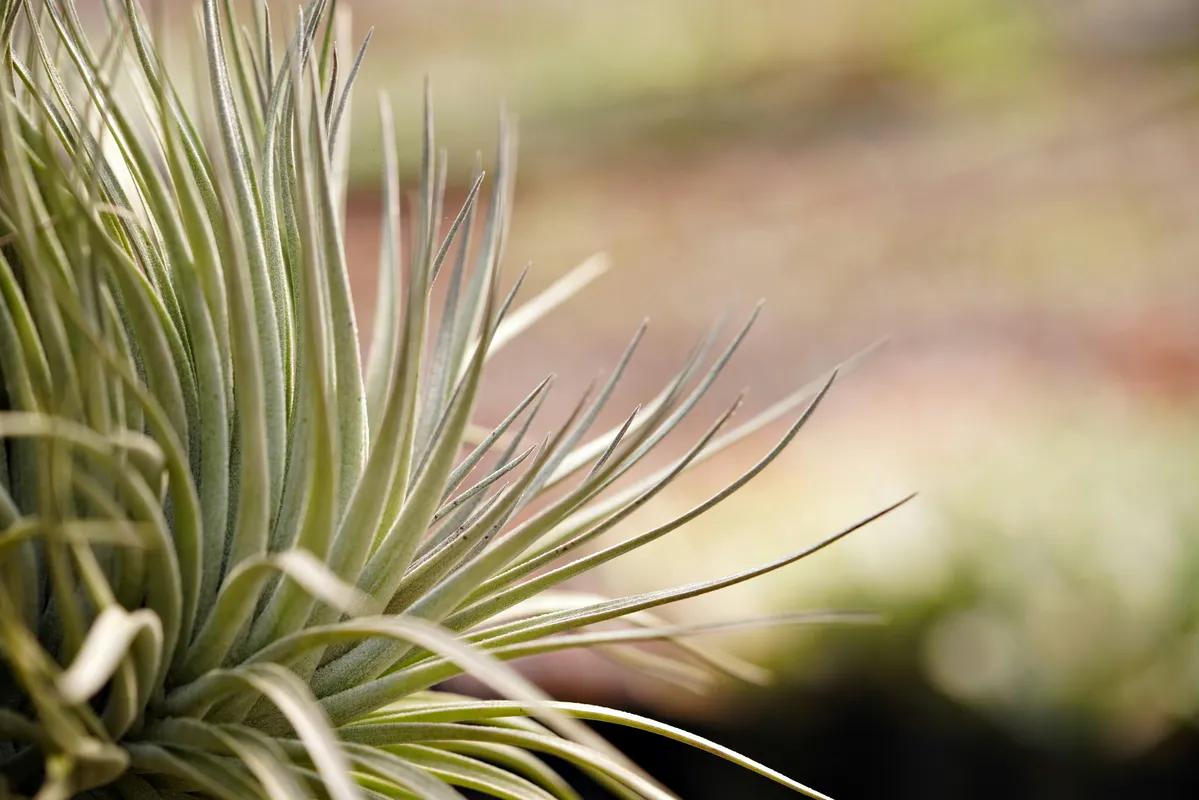
When my oldest brought home an air plant from a school science fair, I honestly thought it was a craft project. It was sitting in a little wire holder, no pot, no dirt, just this spiky green thing that looked like it was already dead. “Dad, you just spray it with water,” he told me, with the confidence of a seven-year-old who had listened to exactly one explanation from his teacher.
Turns out, he was mostly right. Air plants - or Tillandsia, if you want to get fancy at the garden center - are some of the most forgiving houseplants you can own. No soil required. No complicated repotting schedule. Just a plant that literally floats through life, pulling moisture and nutrients from the air around it.
If you have killed every other houseplant in your apartment, this might be the one that breaks the streak.
What Exactly Are Air Plants?
Tillandsia is a genus of over 650 species in the bromeliad family. In the wild, they grow on tree branches, rock faces, and even telephone wires across Central and South America. They are epiphytes, which means they attach to surfaces for support but don’t steal nutrients from their host. Their roots are just anchors - all the real work happens through tiny structures on their leaves called trichomes, which absorb water and nutrients directly from the air.
This is why they don’t need soil. It is not a gimmick. It is genuinely how they evolved over millions of years.
You will see two general categories when shopping for air plants. Xeric types have silvery, fuzzy-looking leaves covered in visible trichomes. They come from drier climates and handle drought like champs. Mesic types have smoother, greener leaves and prefer more humidity - think rainforest conditions. Knowing which type you have makes watering a lot easier.
The Best Air Plants for Beginners
If you are new to air plants, start with species that are hard to mess up.
Tillandsia ionantha is the one you see everywhere, and for good reason. It is small, spiky, turns a beautiful red when it is about to bloom, and tolerates a wide range of conditions. If air plants had a starter pack, ionantha would be in it.
Tillandsia brachycaulos is another great beginner pick. It adapts to different environments easily and also blushes red before flowering. Very forgiving of inconsistent watering.
Tillandsia stricta handles varying conditions well and produces a gorgeous pink flower spike. It is found growing naturally across a wide range of climates, which tells you everything about how adaptable it is.
Tillandsia xerographica is the showstopper - a large, silvery rosette that can grow up to two feet across over many years. It is a xeric variety, so it actually prefers less water than most air plants. If you want a statement piece that guests will ask about, this is the one. Fair warning: it grows slowly, but it can live for twenty years or more.
Light: Bright but Not Scorching
Air plants want bright, indirect light. Think of it this way - in nature, they are hanging from tree branches, getting filtered sunlight through the canopy. That is the vibe you are going for.
A spot near a south-facing or east-facing window works well. If you only have north-facing windows (welcome to apartment life), a grow light on a 12-hour timer placed within about three feet of the plant will keep them happy.
The one thing you want to avoid is strong, direct afternoon sun. It will sunburn the leaves, and trust me, a crispy air plant is not the aesthetic anyone is going for. Morning sun is usually fine - it is that intense midday and afternoon heat that causes problems.
If you notice your air plant’s leaves curling inward more than usual, it might be getting too much light and drying out. Leaves that are stretching or losing color might mean it needs more light.
Watering: The Soak-and-Shake Method
Here is where most people go wrong with air plants. Misting alone is usually not enough. The most reliable method is a weekly soak.
How to soak your air plants:
Fill a bowl with room-temperature water - filtered, rainwater, or spring water is ideal. Tap water works in a pinch, but if your water is heavily chlorinated or has lots of minerals, the buildup can clog those trichomes over time. Submerge the plants for 20 to 30 minutes. Then shake them upside down to get rid of excess water, and set them somewhere with good airflow to dry.
This is the important part: they need to dry completely within four hours. Standing water in the crown of an air plant is the fastest way to kill it. If you soak it at night and it sits wet in a dark corner, rot will set in. I learned this the hard way with my first batch. Soak in the morning, shake well, and let them dry near a window or fan.
A rough watering schedule:
For xeric types (silvery, fuzzy leaves): a light misting twice a week, plus a monthly soak. These are drought-tolerant and actually prefer less water.
For mesic types (smoother, greener leaves): a full soak once a week, plus misting every other day if your home is dry. Apartments with forced air heating in winter are especially brutal for these.
In summer or in dry climates, you might need to water more frequently. In winter or in naturally humid rooms like a bathroom, you can scale back. The key is paying attention to how your specific plant responds.
Temperature and Humidity
Air plants are comfortable in the same temperature range most humans prefer: roughly 65 to 90 degrees Fahrenheit during the day, dropping to 50 to 65 at night. They are tropical plants, so they do not like cold drafts or temperatures below 45 degrees.
Humidity between 50 and 70 percent is ideal. If you live somewhere dry or blast the heat all winter, you will need to compensate with more frequent misting or soaking. Bathrooms and kitchens tend to have naturally higher humidity, which makes them great spots for air plants.
One thing air plants absolutely need is air circulation. It is right there in the name. Do not seal them inside a closed terrarium or press them against a surface where air cannot flow around the leaves. Open terrariums, wire holders, and driftwood mounts all work because they let air move freely.
Where to Display Them
This is the fun part. Because air plants do not need soil, you can put them basically anywhere that gets decent light and airflow. Some ideas that have worked in our house:
Tucked into a piece of driftwood on a bookshelf. Sitting in a wire geometric holder hanging from the ceiling. Perched on a small dish on the bathroom windowsill. Nestled into a seashell on the kitchen counter (my kid’s contribution). Mounted on a piece of cork bark hung on the wall.
Just avoid anything airtight. Glass terrariums look beautiful but need to be open-topped. And do not use hot glue to attach them to surfaces - it can damage the plant. Use fishing line, wire, or non-toxic craft adhesive if you need to secure them.
Feeding Your Air Plants
Air plants are not heavy feeders, but an occasional boost helps them grow and bloom. Use a bromeliad or tillandsia-specific fertilizer diluted to one-quarter strength. Add it to your soaking water once a month during the growing season (spring through fall). Skip fertilizer in winter.
Over-fertilizing will do more harm than good. These plants evolved to survive on tiny amounts of nutrients from rainwater and decomposing organic matter. A little goes a long way.
Common Problems and How to Fix Them
Leaves curling and drying out. Your plant is thirsty. Give it a longer soak (up to an hour) and increase your watering frequency. Check if it is sitting in a spot that is too hot or dry.
Brown or mushy base. This is rot, usually from water sitting in the crown too long. If caught early, you can peel off the affected outer leaves and let the plant dry thoroughly. If the whole base is mushy and the leaves pull away easily, it is probably too far gone. Make sure you are shaking excess water out after soaking and letting it dry completely.
Leaves losing color or looking pale. Usually a light issue. Move the plant to a brighter spot. If you are using tap water with lots of minerals, that could also be contributing.
No blooms. Air plants bloom once in their lifetime, then produce pups (baby plants) and gradually decline. This is normal. If your plant has been healthy for a year or more, it may just need time. Bright light and occasional fertilizer can encourage blooming.
Brown leaf tips. Usually a sign the air is too dry or the water quality is not great. Switch to filtered or rainwater and increase humidity.
The Pup Cycle
Here is something nobody tells you about air plants: they are not immortal. Each plant blooms once, then slowly dies over the next year or two. But before it goes, it produces offsets called pups - tiny baby plants that grow from the base of the mother plant.
You can leave the pups attached and let them form a clump, which looks amazing over time. Or once a pup is about one-third the size of the parent, you can gently twist it off and start a new individual plant. Free plants from free plants. Hard to argue with that.
The whole lifecycle from pup to bloom takes one to several years depending on the species. Xerographica takes its sweet time. Ionantha is relatively quick. Either way, it is satisfying to watch.
Why I Think Every Family Should Have Air Plants
Look, I am a dad with two young kids, a cat, and not enough hours in the day. Air plants fit into that chaos perfectly. They are non-toxic to pets and kids. They do not tip over and spill dirt on the carpet. They weigh nothing, so even if a curious toddler grabs one off a shelf, nobody is getting hurt.
My kids love checking on ours and misting them with a spray bottle. It has become a little Sunday morning ritual - check the air plants, give them a spritz, see if any pups are growing. It is the lowest-stakes plant parenting you can do, and that is exactly what a lot of us need.
If you have been telling yourself you do not have room for plants, or you kill everything you touch, or you just do not have time - try an air plant. A single ionantha costs a few dollars, needs five minutes of attention a week, and might just be the gateway plant that gets you hooked on the whole green thing.
Start with one. You will end up with twelve. Do not say I did not warn you.