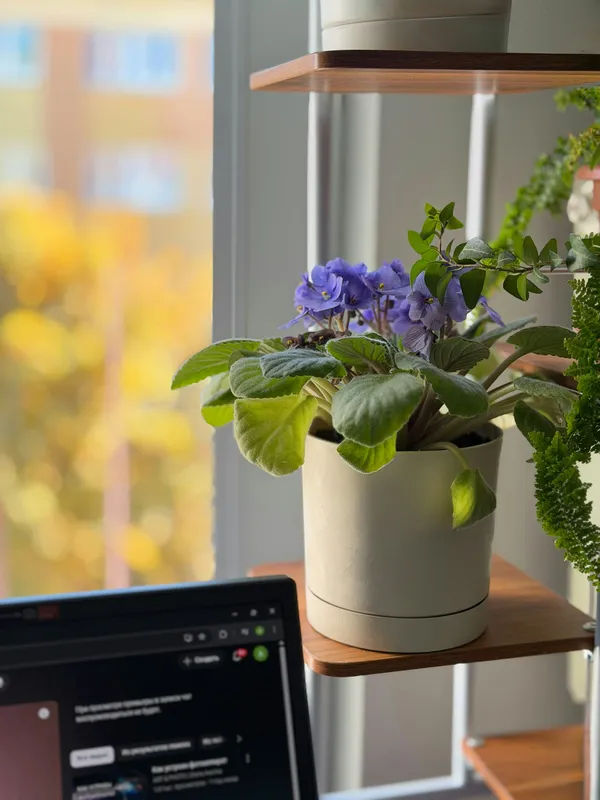
African Violet Care: Your Grandma’s Favorite Houseplant Deserves a Comeback
Every Chinese grandmother I know has at least one African violet on a windowsill somewhere. My wai po had three of them lined up on a kitchen shelf in Queens, nestled between a bag of dried goji berries and a ceramic lucky cat. They bloomed constantly. She never read a care guide in her life.
For years I dismissed African violets as “grandma plants” - too old-fashioned, not trendy enough for my millennial plant shelf dominated by monsteras and hoyas. Then my daughter pointed at one in a garden center and said, “Pretty purple flowers!” And I thought, okay. Maybe wai po was onto something.
Turns out she was. African violets (Streptocarpus sect. Saintpaulia, formerly Saintpaulia ionantha) are some of the most rewarding houseplants you can grow. They bloom reliably indoors, stay compact enough for any apartment, and once you learn their quirks, they basically take care of themselves.
Here’s everything I’ve learned about keeping them happy - with a few lessons borrowed from grandma.
Why African Violets Are Worth Growing
Let’s be real: most houseplants are all about the foliage. Getting a monstera to put out a new leaf feels like a holiday. But African violets? They give you flowers. Lots of them. Repeatedly. Without needing a greenhouse, grow tent, or ritual sacrifice to the plant gods.
They come in purples, pinks, whites, blues, bicolors, and even ruffled varieties that look like tiny roses. A single plant can bloom for weeks at a time and rebloom multiple times a year with minimal effort.
They’re also small. If you’re in an NYC apartment like me, where every square inch of windowsill real estate is precious, African violets earn their spot. A mature plant fits in a 4-inch pot and never tries to take over the bookshelf like a pothos with ambitions.
Light: Bright but Gentle
African violets need a lot of light to bloom - about 11 to 14 hours of bright, indirect light daily. But direct afternoon sun will scorch their leaves faster than you can say “leaf burn.”
The ideal spot: An east-facing window is perfect. Morning sun is gentle enough to keep them happy without the intense afternoon rays that cause problems. A north-facing window can work if it’s unobstructed, but you’ll probably get fewer blooms.
No good windows? A desk lamp with an LED grow light works great. African violets respond really well to artificial light, which is part of why your grandmother could grow them anywhere in the house. Position the light about 12 inches above the plant and run it for 12-14 hours a day.
How to tell if your light is wrong:
- Leggy, reaching stems with few flowers = not enough light
- Pale or bleached leaves = too much direct sun
- Leaves curling downward and clustering tight to the center = too much light
- Dark green, healthy leaves but no blooms = juuust under the light threshold - move it a bit closer to the window
Watering: The One Thing Most People Get Wrong
Here’s the thing about African violets - they hate getting their leaves wet. Cold water on their fuzzy leaves causes brown spots that won’t heal. This is probably the number one reason people think they’re hard to grow.
The solution is simple: water from the bottom.
Bottom watering method:
- Fill a saucer or shallow tray with room-temperature water
- Set the pot in the water (make sure your pot has drainage holes)
- Let it sit for 20-30 minutes while the soil wicks up moisture
- Remove the pot and dump out any remaining water
That’s it. No fancy watering cans needed. No hovering over the sink trying not to splash.
When to water: Stick your finger in the top inch of soil. If it’s dry, it’s time. If it still feels slightly moist, wait another day or two. African violets like evenly moist soil but absolutely hate sitting in soggy conditions.
Water temperature matters. Use room-temperature water. Cold water straight from the tap can shock the roots and cause those ugly leaf spots. I fill a watering can the night before and let it come to room temp overnight. My wai po used to save the water from rinsing rice and use that - she claimed it made the flowers brighter. I can’t prove that scientifically, but I’m not going to argue with results.
Soil: Light and Fluffy
African violets need soil that drains fast but holds some moisture. Regular potting mix is usually too dense and will compact around the roots, leading to root rot.
A good African violet mix:
- 1 part peat moss or coco coir
- 1 part perlite
- 1 part vermiculite
You can also buy pre-made African violet potting mix at most garden centers. It’s one of the rare cases where the specialty soil is actually worth buying instead of mixing your own.
The ideal soil pH is slightly acidic, around 6.0 to 6.5. Don’t stress about testing this - if you’re using a good violet mix or the recipe above, you’ll be in the right range.
Temperature and Humidity
African violets are comfortable in the same temperatures you are. They do best between 65-75 degrees F (18-24 degrees C). They don’t like cold drafts, so keep them away from air conditioning vents and drafty windows in winter.
Humidity-wise, they prefer 50-60%, which is higher than most homes naturally provide. A few ways to bump it up:
- Set the pot on a pebble tray filled with water (the pot sits on the pebbles, not in the water)
- Group several plants together so they create a little humidity microclimate
- Run a small humidifier nearby
Don’t mist African violets. Remember the whole “they hate wet leaves” thing? Misting is a fast track to leaf spots and fungal problems.
Feeding Your Violets
African violets are moderate feeders. During spring and summer when they’re actively growing, feed every 2-4 weeks with a balanced liquid fertilizer diluted to half strength. In fall and winter, cut back to once a month or stop entirely.
There are African violet-specific fertilizers available (usually with a slightly higher phosphorus number to encourage blooming), and they work well. But honestly, any balanced houseplant fertilizer at half strength does the job.
One tip: If your plant has healthy, dark green leaves but refuses to bloom, try a fertilizer with a higher middle number (the P in N-P-K). Something like 8-14-9 can give it the nudge it needs to put out flowers.
Repotting: Keep It Cozy
African violets like being slightly root-bound. Repot only when roots are visibly circling the bottom of the pot or poking out of drainage holes, usually every 12-18 months.
When you do repot:
- Go up only one pot size (from 3-inch to 4-inch, for example)
- Use fresh African violet mix
- Don’t bury the crown (the center where leaves emerge) deeper than it was before
- Water from the bottom after repotting and keep it out of bright light for a day or two
Self-watering pots with a wick system are genuinely great for African violets. They maintain consistent moisture without you having to remember a watering schedule. If you’re a serial plant-forgetter (no judgment), a wick pot is a good investment.
Common Problems and How to Fix Them
Brown spots on leaves: Almost always caused by cold water touching the leaves. Switch to bottom watering and remove damaged leaves - they won’t recover.
Soft, mushy leaves: Overwatering or root rot. Let the soil dry out more between waterings. If the roots look brown and mushy when you unpot it, trim the dead roots, repot in fresh soil, and water less frequently going forward.
No flowers: Usually a light issue. Move the plant to a brighter spot or add a grow light. Also make sure you’re not over-fertilizing with nitrogen, which promotes leaf growth at the expense of blooms.
Leggy, stretched-out growth: Not enough light. The plant is literally reaching for more. Move it closer to a window or increase grow light hours.
White powdery coating on leaves: Powdery mildew, usually from poor air circulation and high humidity. Increase airflow around the plant and remove affected leaves. Reduce misting (or stop entirely).
Tiny cotton-like clusters in leaf joints: Mealybugs. Dab them with a cotton swab dipped in rubbing alcohol. For serious infestations, treat with insecticidal soap.
Making More African Violets
One of the coolest things about African violets is how easy they are to propagate from leaf cuttings. This is the original “free plants” hack that grandmothers have been running for decades.
- Pick a healthy, mature leaf from the middle ring of the plant
- Cut it off with a clean blade, leaving about an inch of stem
- Stick the stem into moist African violet mix at a 45-degree angle
- Cover loosely with a plastic bag or clear container to keep humidity up
- Wait 8-12 weeks. Tiny plantlets will emerge at the base of the leaf
- Once the babies have 2-3 leaves of their own, separate and pot them individually
My wai po used to hand out baby African violets to every visitor. If you came to her house, you were leaving with a plant whether you wanted one or not. It was her love language.
The Comeback Kid
African violets never actually went away. They just fell out of the spotlight while fiddle leaf figs and pink princesses had their moment. But if you want a plant that actually flowers in your apartment, stays small, doesn’t require a humidifier running 24/7, and connects you to generations of plant growers who came before - give them a try.
Start with one. Put it on a windowsill. Water it from the bottom. Watch it bloom.
And if your grandmother is still around, call her and ask about her violets. I bet she’s got some tips that no care guide will ever cover.